How to Avoid Eco Hotels Greenwashing Risks: An Auditor’s Guide
The rapid expansion of the sustainable tourism sector has inevitably fostered a marketplace rife with obfuscation. As consumer demand for environmentally responsible travel grows, the incentive for properties to present a “green” facade has outpaced the development of standardized, verifiable accountability. Consequently, the hospitality industry currently operates within a fragmented regulatory environment where the distinction between substantive ecological management and aesthetic environmental marketing is increasingly difficult to perceive.
This systemic issue is further complicated by the proliferation of third-party certifications, many of which lack the rigor required to guarantee actual impact. For the conscientious traveler, developer, or investor, the challenge is not merely to identify a “sustainable” hotel, but to dismantle the marketing narratives that disguise extractive operational models. Achieving clarity requires a departure from surface-level vetting and a shift toward an audit-oriented approach that prioritizes data, operational transparency, and site-specific resource management.
True authority in this space is found by examining the invisible mechanics of a property. A hotel may leverage the imagery of local flora and recycled wood in its lobby while simultaneously operating under high-consumption protocols that deplete the very ecosystems they claim to protect. Navigating this landscape demands that one understands the systemic indicators of integrity. This article provides a comprehensive framework for auditing such claims, ensuring that decisions are grounded in objective reality rather than the persuasive influence of carefully crafted brand messaging.
Understanding “how to avoid eco hotels greenwashing risks”

To learn how to avoid eco hotels greenwashing risks, one must first accept that “sustainability” is rarely a binary state. Most properties exist along a spectrum, and the failure of many travelers is the assumption that a singular certification or aesthetic choice implies an all-encompassing commitment to the environment. The fundamental risk is systemic decoupling—a scenario where the marketing team promotes a “green” image that is completely detached from the facility’s engineering, resource management, and labor practices.
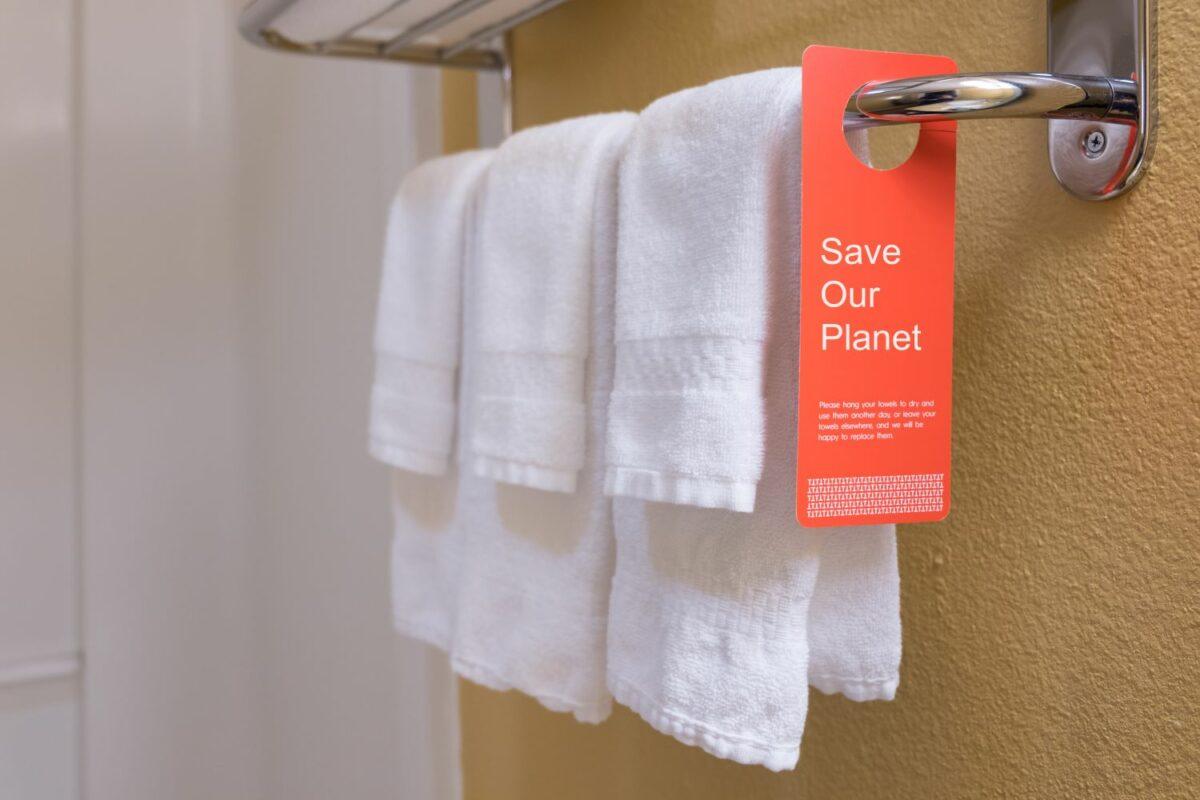
Over-simplification acts as the primary driver of this deception. When we look at a hotel and see a rack of bicycles or a notice asking guests to reuse towels, we are seeing performance, not infrastructure. The danger lies in conflating these small-scale, guest-facing initiatives with the property’s actual energy efficiency, waste diversion, or community engagement protocols. A truly responsible hotel does not need to highlight its recycling program, as such management is a base requirement of its operational logic. To navigate this effectively, one must look for the “absent evidence”—the metrics that are not being reported and the systems that remain hidden from public view.
Deep Contextual Background
The historical trajectory of the hospitality industry was one of mass homogenization. In the mid-20th century, the global standard for luxury was synonymous with high-impact, standardized comfort, regardless of the property’s location. This paradigm relied on cheap energy and globalized supply chains, alienating hotels from the immediate ecological and cultural realities of their host destinations.
In response, the early 2000s saw the emergence of the “eco-lodge” as a reactive movement. However, as “sustainability” transitioned into a profitable marketing demographic, the industry saw an influx of larger corporate entities attempting to capture this market through the acquisition of “green” labels. This era established the current baseline of risk, where the terminology of sustainability became untethered from operational reality. We are now in a phase of correction, where professional observers focus on restorative practices, circular economies, and quantifiable resource data, seeking to reconcile the historical extractive nature of tourism with the urgent need for environmental resilience.
Conceptual Frameworks and Mental Models
To effectively audit a property, utilize these mental models:
-
The Decoupling Audit: This framework maps the distance between the hotel’s marketing rhetoric and its physical operations. The larger the gap, the higher the risk of greenwashing.
-
The Resource Intensity Metric: A truly sustainable property can quantify its water, energy, and waste per guest-night. If this data is unavailable, the property is likely hiding its actual consumption levels.
-
The Local Integration Loop: This model evaluates whether the property acts as an anchor for the local community—hiring locally, sourcing food regionally, and investing in surrounding infrastructure—or whether it functions as a colonial-style, extractive entity.
-
The “Invisible Guest” Principle: A high-integrity property manages resources without the guest needing to be aware of the “burden.” If a hotel is constantly forcing guests to make sacrifices to save water or energy, it often indicates a fundamental lack of efficient infrastructure.
Key Categories and Variations
| Category | Primary Focus | Greenwashing Vulnerability |
| Performative Green | Visible guest-facing tweaks | High: Ignores the building’s footprint |
| Compliance-Based | Meeting minimum certification | Moderate: Follows the letter, not the spirit |
| Systemic/Integrated | Regenerative architecture | Low: Deep integration of all functions |
| Community-Led | Socio-economic restoration | Low: Built on local accountability |
Realistic Decision Logic
When vetting, focus on the “back-of-house” operations. Does the property have an on-site gray-water treatment plant? Does it publish its carbon emissions report? If the marketing highlights the aesthetic beauty of the local jungle but stays silent on how it manages its liquid waste, you are likely looking at a high-risk entity.
Real-World Scenarios and Decision Logic
Scenario 1: The Remote Luxury Villa Resort
-
Constraint: Extreme distance from municipal infrastructure.
-
Decision Point: Are they burning waste on-site, or is there a circular system?
-
Failure Mode: Resorting to “eco-tourism” to bring guests to fragile ecosystems, then building villas with massive, individual HVAC systems.
-
Second-Order Effect: The creation of an “ecological” experience that generates more carbon through logistics and travel than it saves through operational efficiencies.
Scenario 2: The Urban Heritage Retrofit
-
Constraint: Structural limits on building efficiency.
-
Decision Point: Prioritizing aesthetic restoration over HVAC modernization.
-
Failure Mode: Using the “historic building” label as a justification for extreme energy waste.
-
Second-Order Effect: A failure to address thermal efficiency now creates a massive “energy debt” that will necessitate a more destructive, full-scale renovation later.
Planning, Cost, and Resource Dynamics
The economic reality of the hospitality sector necessitates high-volume operations, which rarely align with slow, regenerative ecological cycles.
-
Direct Costs: High-integrity operations are inherently more expensive to maintain, as they require specialized labor and local supply chain management.
-
Opportunity Cost: Choosing the most honest properties often means accepting a less “perfect” aesthetic and a more localized, less globally uniform experience.
| Expense Category | Sustainability Depth | Market Signal |
| Marketing Spend | Low | Higher likelihood of greenwashing |
| Infrastructure/Engineering | High | Strong indicator of actual intent |
| Community/Staff Wages | High | Leading signal of social sustainability |
Risk Landscape and Failure Modes
The “how to avoid eco hotels greenwashing risks” endeavor is made difficult by the complexity of modern supply chains. The greatest danger is systemic misalignment, where the board or owners demand profit growth that directly contradicts the ecological promises made by the on-site management. Furthermore, the risk of regulatory dilution means that even well-known “green” labels have lowered their standards to achieve market penetration, making them useless for the purpose of serious audit.
Compounding these is the “destination-at-risk” factor—properties in fragile environments are often the most heavily greenwashed because their survival depends on the public perception of them as “stewards” of the very landscapes they are currently degrading.
Governance, Maintenance, and Long-Term Adaptation
Authentic governance requires transparency and internal audit cycles. A property should have a published, regularly updated set of environmental KPIs.
-
Review Cycles: Does the hotel update its environmental performance reports annually?
-
Adjustment Triggers: Does the management respond when a waste or energy stream exceeds its target, or does it ignore the data?
-
Layered Checklist for Auditors:
-
Examine the supply chain provenance for the top 5 largest waste-producing items.
-
Inquire about the property’s water filtration and disposal technology.
-
Interview staff (not the GM) about the property’s actual conservation philosophy.
-
Measurement, Tracking, and Evaluation
True integrity is marked by the presence of uncomfortable data.
-
Leading Indicators: Real-time water/energy usage per guest-night reported on an annual dashboard.
-
Lagging Indicators: Publicly available reports on landfill diversion vs. actual on-site processing.
-
Qualitative Signals: Do the resort’s claims align with the local community’s experience? If the resort claims “community partnership” but pays minimum wage while importing foreign managers, the social sustainability claim is false.
Common Misconceptions and Oversimplifications
-
“Carbon Neutral” equals “Sustainable”: Carbon credits are a financial offset, not a measure of operational change.
-
“Eco” implies “Rustic”: Modern engineering can achieve high luxury without high impact.
-
Certifications are a guarantee: Most labels are entry-level; they require zero operational proof.
-
Recycling is the goal: Recycling is the final, least-effective step in a truly circular system.
-
Staff uniformity indicates excellence: True excellence often requires decentralized, site-specific management.
-
“Natural” materials are inherently good: A bamboo building shipped from thousands of miles away has a massive carbon footprint.
Conclusion
The effort to navigate the opaque market of sustainable travel requires a fundamental change in the traveler’s perspective. When one learns how to avoid eco hotels greenwashing risks, one essentially develops the tools to act as an auditor of their own leisure time. True hospitality is an integrated system that values integrity, longevity, and restorative practice over the fleeting rewards of aesthetic performance. By prioritizing verifiable data, investigating the unseen operational infrastructure, and demanding total transparency from management, travelers can effectively reject the hollow promises of greenwashed marketing.