How to Plan Eco Hotels Weddings on a Budget: Expert Guide
The traditional wedding industrial complex is built upon a foundation of hyper-consumption, single-use materials, and significant resource waste. As couples increasingly seek to align their personal milestones with their environmental values, the demand for sustainable hospitality venues has surged. However, this shift often brings a misconception that ecological integrity is synonymous with exorbitant pricing. In reality, the most sustainable choices—focusing on minimalism, local resource utilization, and efficiency—often align perfectly with prudent financial management.
Successfully organizing a wedding at an eco-conscious property requires a fundamental departure from standard planning methodologies. Instead of viewing the event as a series of aesthetic selections to be purchased, planners must treat the gathering as a logistical puzzle. This approach prioritizes the inherent beauty of the location, the minimization of waste, and the support of local ecosystems and economies. It is a transition from an extractive, high-impact event model to one that is restorative, intentional, and resource-conscious.
This article serves as a technical manual for those navigating the intersection of environmental ethics and budgetary constraints. It provides the architectural framework necessary to execute a meaningful event without the traditional reliance on high-carbon logistics or unnecessary material volume. By focusing on systemic efficiency and deliberate resource allocation, the goal is to demonstrate that a high-value, low-impact celebration is not only possible but inherently more sophisticated than its high-consumption counterpart.
Understanding “how to plan eco hotels weddings on a budget”
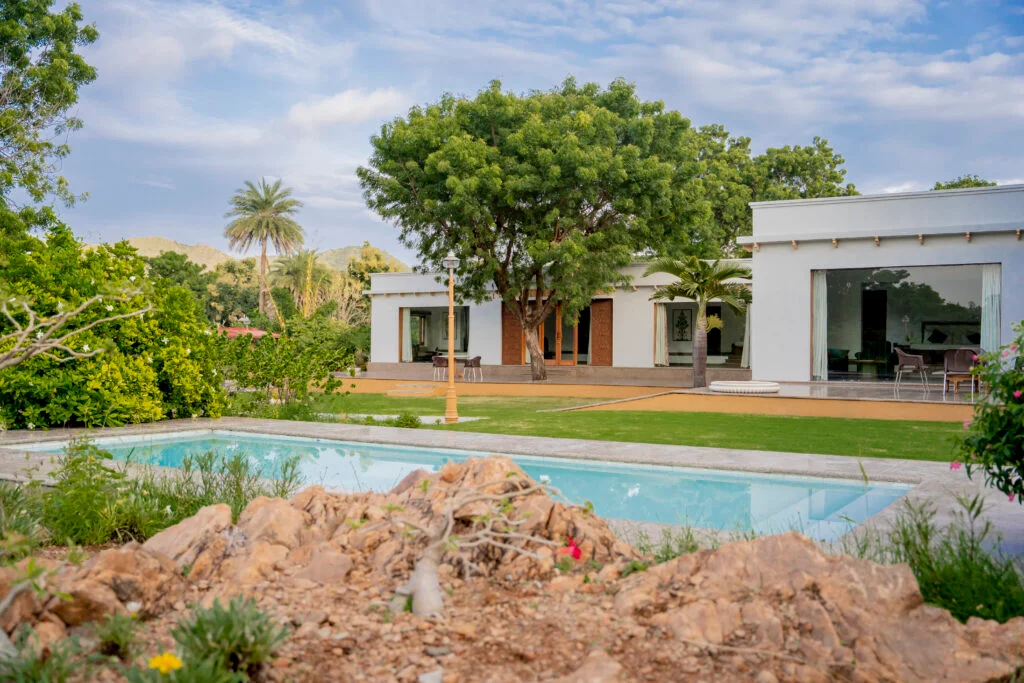
When analyzing how to plan eco hotels weddings on a budget, the central challenge involves decoupling the concept of “luxury” from the concept of “expenditure.” The conventional hospitality market sells extravagance through excess—imported floral arrangements, single-use décor, and long-distance logistics. A sustainable approach, however, identifies beauty in the site-specific environment, eliminating the need for these high-cost, high-impact additions.
Oversimplification poses a significant risk to the budget. Couples often attempt to force a traditional, high-consumption event into a sustainable venue, resulting in unnecessary costs for “green” upgrades. True efficiency is found by selecting a venue that is inherently designed for lower consumption. If the site requires minimal artificial lighting, heating, or cooling, the savings are immediate. Learning how to plan eco hotels weddings on a budget means prioritizing properties that have already integrated energy and waste systems, as these venues often provide infrastructure that would otherwise need to be rented or imported, such as sound systems, natural seating arrangements, or in-house catering that avoids expensive outside logistics.
Deep Contextual Background
The evolution of the “green” wedding is part of a broader reaction against the hyper-standardized, high-waste celebration model that peaked in the late 20th century. Historically, these events were used as displays of economic status, regardless of the ecological cost. The shift we observe today toward smaller, place-based, and intentional gatherings mirrors a larger societal move toward circular living.
As the industry matures, we see a divergence. On one hand, there is the “green luxury” market, which replaces conventional waste with high-cost sustainable alternatives. On the other, there is the “regenerative” approach, which focuses on absolute reduction. For those interested in how to plan eco hotels weddings on a budget, the latter path is far more effective. It treats the event not as a commercial product but as a temporary, low-impact integration into an existing, functional hospitality system that already operates on principles of efficiency.
Conceptual Frameworks and Mental Models
-
The Carrying Capacity Model: This treats the event as a temporary load on the venue’s ecosystem. The goal is to ensure the total environmental and financial output does not exceed the venue’s natural and operational limits.
-
Resource Proximity Index: Every vendor or item brought to the site incurs a cost—both financial and carbon. Reducing the distance between the source and the venue is the primary lever for cost savings and footprint reduction.
-
The “Invisible Infrastructure” Model: Instead of renting décor, utilize the venue’s existing landscape as the primary environment. This removes the need for expensive, high-impact rental items while enhancing the authenticity of the setting.
-
Circular Procurement: Treat all items brought to the event as elements to be reused, donated, or composted locally, avoiding the “trash-at-the-end” cost structure typical of events.
Key Categories and Variations
| Category | Typical Resource Focus | Budgetary Impact |
| Vernacular Setting | Landscape as décor | Very High Savings |
| Micro-Catering | Seasonal, local, bulk prep | High Savings |
| Adaptive Technology | Using existing AV/power | Moderate Savings |
| Digital-First Logic | Eliminating physical invites/gifts | Moderate Savings |
Realistic Decision Logic
When evaluating how to plan eco hotels weddings on a budget, start with the venue’s core competencies. If a property is already an efficient energy user, lean into their in-house systems rather than bringing in outside vendors. The most cost-effective events are those that leverage the inherent characteristics of the site—such as an orchard, a terrace, or a high-performance building—rather than fighting against them to create a generic event aesthetic.
Real-World Scenarios and Decision Logic
Scenario 1: The Remote Mountain Lodge
-
Constraint: Logistics are expensive due to distance.
-
Decision Point: Renting extensive décor versus using local botanical elements.
-
Failure Mode: Attempting to ship elaborate floral arrangements from a city florist, which creates a huge carbon and cost spike.
-
Second-Order Effect: Engaging a local forager or small-scale grower creates a stronger community bond and a more authentic aesthetic.
Scenario 2: The Urban Adaptive Reuse Hotel
-
Constraint: Limited space, high cost of venue hours.
-
Decision Point: A short, high-efficiency event versus a long, sprawling celebration.
-
Failure Mode: Scheduling an event that requires extensive “reset” time, which forces the hotel to charge for full-day venue rental.
-
Second-Order Effect: A focused, 4-hour high-impact event minimizes venue costs and aligns with energy-efficient operation cycles.
Planning, Cost, and Resource Dynamics
The budgetary focus must shift from “itemized expense” to “total cost of implementation.”
-
Direct Costs: Site fees, local catering, and essential guest services.
-
Indirect Costs: The time investment required to find locally based, low-impact vendors.
-
Opportunity Cost: Choosing a low-impact event may mean fewer “traditional” wedding items, which requires setting clear expectations with stakeholders.
| Cost Range | Typical Inclusions | Sustainability Maturity |
| Essentialist | Site, local food, zero waste | Highest Efficiency |
| Moderated | Essential elements + local artisans | Balanced |
| Systemic | High-level circular management | Requires high planning load |
Risk Landscape and Failure Modes
The primary risk when investigating how to plan eco hotels weddings on a budget is the “hidden service charge.” Some venues call themselves “green” but charge a premium for basic sustainable practices that should be operational norms. Another failure mode is the “vendor gap”—where a couple hires a conventional, non-sustainable vendor who is unfamiliar with the waste-minimization requirements of the site, leading to friction and unexpected waste management fees.
Governance, Maintenance, and Long-Term Adaptation
Governance of the wedding plan requires an internal audit. The couple or planner must act as a project manager, not just a consumer.
-
Vendor Vetting: Require all vendors to provide a specific waste-disposal plan.
-
Resource Review: Ensure that every rental item has a clear “second life” or exit strategy before it is contracted.
-
Layered Checklist:
-
Verify waste-bin capacity and composting availability.
-
Confirm lighting requirements (can we rely on daylight?).
-
Ensure the food menu is based on local, seasonal availability to reduce costs.
-
Measurement, Tracking, and Evaluation
A successful budget-conscious event is measured by its simplicity.
-
Leading Indicators: The ratio of local-versus-shipped items and the total number of physical items arriving on-site.
-
Lagging Indicators: Total waste generated (in weight) and final costs compared to the original budget.
-
Qualitative Signals: The ease of the transition from setup to teardown—the simpler the event, the lower the labor cost and the lower the environmental impact.
Common Misconceptions and Oversimplifications
-
Eco-friendly means expensive: Often, it is the exact opposite if one prioritizes minimalism.
-
You need an “Eco” planner: A competent planner with a strong sense of logistics is better than an “eco” label.
-
Decor is necessary: Natural environments are already decorated; artificial décor is usually a waste of money.
-
Bulk is always better: Waste happens even with bulk; efficiency is about precision, not volume.
Conclusion
Understanding how to plan eco hotels weddings on a budget is ultimately an exercise in clarity. By stripping away the performative elements of the traditional wedding, couples can focus on the core value of the celebration: the gathering itself. This process requires a shift from passive buying to active project management, prioritizing local resources, site-inherent features, and logistical simplicity. When planned with precision, these events prove that financial prudence and ecological responsibility are not only compatible but mutually reinforcing, leading to a more intentional, memorable, and enduring celebration.