American Eco Hotels Lifestyle: An In-Depth Guide to Regenerative Hospitality
The evolution of hospitality in the United States has reached a critical inflection point, where the traditional pursuit of standardized luxury is increasingly viewed as an outdated, resource-intensive model. Modern travelers are moving toward a more integrated experience, one that seeks to reconcile the comfort of high-end lodging with a rigorous, data-backed commitment to environmental restoration.
To fully grasp the american eco hotels lifestyle, one must look beneath the veneer of marketing narratives and examine the invisible engineering that supports these venues. Authentic sustainable hospitality is defined by its operational transparency—the ability of a property to prove its resource efficiency, demonstrate its commitment to regional supply chains, and illustrate its positive impact on the surrounding biome.
This article provides a comprehensive framework for navigating this complex landscape. By dissecting the systemic, technical, and philosophical components of contemporary sustainable lodging, we can move past superficial branding to define what it truly means to exist within a high-performance, environmentally responsible hospitality environment. The objective is to provide a reference for those seeking properties that do not just participate in the “eco” market, but actively reshape the industry toward a regenerative, long-term future.
Understanding “american eco hotels lifestyle”

The term american eco hotels lifestyle is often employed as a catch-all for various, frequently contradictory, hospitality models. At its most profound, it represents a deep-seated integration of hospitality into the local geological and biological landscape. The primary misunderstanding is the assumption that one can buy into this lifestyle without an understanding of the mechanical and social systems that make it possible.
Oversimplification poses a serious barrier to entry for the discerning guest. Many assume that sustainability is a binary state—that a hotel is either “green” or it is not. In truth, the american eco hotels lifestyle is a spectrum of operational maturity. A property might excel at composting food waste but fail entirely in its energy usage, or it might be highly efficient in its power consumption while remaining fundamentally disconnected from its host community.
Deep Contextual Background
This necessitated heavy investment in imported energy, centralized HVAC systems, and a supply chain that favored high-volume, standardized goods. This approach served the needs of 20th-century mass tourism but became increasingly unsustainable as the environmental costs of such an extractive model became undeniable.
The transition toward the current american eco hotels lifestyle was catalyzed by two parallel developments: the maturation of high-performance building engineering (passive design) and the growth of local, community-focused economic models. We have moved from a period of “mitigation,” where the goal was to reduce the damage of a standard hotel, to a period of “regeneration,” where the goal is to leverage the property as a vehicle for restoring the local landscape. This historical arc demonstrates that the modern sustainable hotel is not an “alternative” lodging option, but a sophisticated response to the resource scarcity and environmental pressures of the 21st century.
Conceptual Frameworks and Mental Models
To assess the integrity of a property, one should utilize the following frameworks:
-
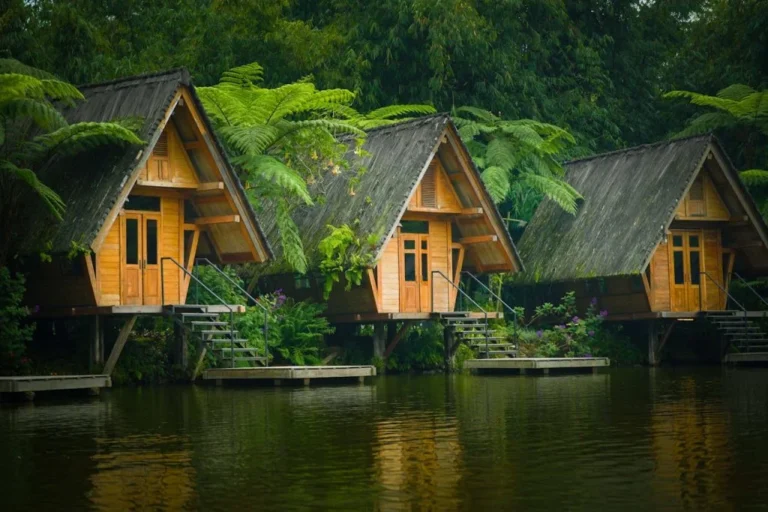
Bioclimatic Integrity: This assesses the building’s physical envelope and orientation. A high-performing property utilizes passive cooling and heating principles—using thermal mass and local topography—to minimize the need for mechanical climate control.
-
Resource Proximity Index: This measures the average distance that inputs (food, materials, goods) must travel to reach the site. Properties that prioritize regional supply chains inherently reduce their carbon footprint while supporting local livelihoods.
-
The Regenerative Quotient: This moves beyond “do no harm” to measure “net positive impact.” Does the hotel contribute to the health of the local watershed, the restoration of native flora, or the resilience of the surrounding town?
-
Operational Circularity: This model analyzes the property’s waste streams. Can the hotel process its organic waste into soil? Can it treat its own gray water for landscape irrigation?
Key Categories and Variations
| Category | Operational Focus | Trade-Offs |
| Passive-Design Lodges | Architectural thermal regulation | Requires guest adaptation to climate |
| Circular Urban Hotels | High-efficiency waste/water loops | Limited access to outdoor biomes |
| Restorative Wildness | Direct landscape intervention | Logistical complexity/Remoteness |
| Agri-Tourism Hubs | Productive local food systems | Requires significant land management |
Decision Logic
When choosing a property to experience the american eco hotels lifestyle, one must align the property’s strength with the site’s conditions. If a property is located in an arid environment, one should prioritize its water management strategies. If it is in a dense urban environment, the focus should shift to energy efficiency and supply-chain circularity.
Real-World Scenarios and Decision Logic
Scenario 1: The High-Desert Solar Retreat
-
Constraint: Extreme heat and water scarcity.
-
Decision Point: Prioritize passive shading over expansive glass facades.
-
Failure Mode: Selecting a property that uses aesthetic glass walls in the desert, necessitating massive A/C consumption.
-
Second-Order Effect: The use of natural desert xeriscaping preserves local aquifers and supports indigenous wildlife.
Scenario 2: The Urban Adaptive-Reuse Property
-
Constraint: Historic building codes limiting envelope changes.
-
Decision Point: Choosing interior energy retrofits (LED, sensors, insulation) over exterior aesthetic modifications.
-
Failure Mode: Focusing on expensive exterior “green” features (green walls) while the building leaks heat through poorly sealed windows.
-
Second-Order Effect: A truly efficient urban property can lead to neighborhood-wide energy awareness by demonstrating the viability of high-performance retrofits.
Planning, Cost, and Resource Dynamics
Sustainable hospitality often involves higher upfront and operational costs because it accurately accounts for the “true cost” of the goods and services provided, such as fair wages and local procurement.
-
Direct Costs: Often higher due to regional, high-quality, and organic inputs.
-
Opportunity Cost: Choosing the most advanced sustainable properties may involve trading certain conventional conveniences (e.g., constant 24/7 temperature control) for a more grounded, site-specific experience.
| Resource Maturity | Investment Intensity | Primary Goal |
| Baseline | Low | Basic diversion/recycling |
| Integrated | Moderate | Energy/Water system efficiency |
| Advanced | High | Regenerative/Circular impact |
Risk Landscape and Failure Modes
The “greenwashing” trap is the most significant risk in this sector. Many properties adopt the terminology of the american eco hotels lifestyle without changing their core operations. The taxonomy of failure includes:
-
Systemic Decoupling: Marketing claims that are not reflected in the building’s infrastructure.
-
Regulatory Capture: Reliance on low-standard certifications that do not require ongoing performance audits.
-
Human-Factor Failure: Where guests or staff are not educated on how to maintain the property’s circular systems, leading to system breakdown.
Governance, Maintenance, and Long-Term Adaptation
A robust property operates under a permanent governance structure. Sustainability is not a project that finishes upon opening; it is a continuous operational cycle.
-
Quarterly Audits: A granular review of all resource usage, including sub-metered water and energy data.
-
Adaptive Triggers: Using seasonal data to modify site operations (e.g., menu adjustments based on harvest, energy limiting during peak grid demand).
-
Layered Checklist:
-
Audit supply-chain provenance for the highest-volume consumables.
-
Verify the health of the composting and gray-water infrastructure.
-
Review staffing training to ensure conservation protocols are strictly maintained.
-
Measurement, Tracking, and Evaluation
High-integrity properties treat their data as a public asset. Look for documentation that includes:
-
Leading Indicators: Real-time visibility into usage metrics.
-
Lagging Indicators: Annual reports that quantify the property’s diversion of waste and reduction in energy demand.
-
Qualitative Signals: Consistency in messaging and practice—if a property claims sustainability, the guest experience should reflect that, not just the marketing brochures.
Common Misconceptions and Oversimplifications
-
“Eco” means rustic/uncomfortable: High-performance engineering allows for significant luxury without excessive resource draw.
-
Offsets fix the problem: Offsets are a final resort, not a substitute for operational efficiency.
-
Certifications are the authority: Many labels are industry-led and fail to look at daily operational realities.
-
Staff don’t need training: Every member of the team must understand the system to ensure its integrity.
-
Technology is the panacea: Simple, well-designed systems are generally more resilient than complex, automated ones.
Conclusion
The american eco hotels lifestyle is ultimately a commitment to a new way of engaging with the landscape—one that favors restoration and systemic efficiency over the convenience of standard-issue excess. It requires the traveler to be an active participant, evaluating a property not as a passive consumer but as an engaged stakeholder in the property’s long-term environmental success. By prioritizing operational transparency, regenerative architecture, and community integration, one can participate in a model of hospitality that preserves the very environments it invites us to explore. This is the future of travel: a thoughtful, iterative process of improvement that respects the limits of our planet while offering a profound, high-integrity guest experience.