Best Eco Hotels for Digital Nomads: A Guide to Productive Stewardship
The intersection of professional mobility and environmental consciousness has catalyzed a significant shift in the hospitality sector. For the modern digital nomad, the search for a workspace is no longer merely about connectivity and ergonomic comfort; it is increasingly defined by the ethical footprint of the lodging. The contemporary professional, often spending weeks or months in a single locale, exerts a disproportionate impact on local resources compared to the traditional, short-term tourist. Consequently, the demand for accommodations that reconcile high-speed productivity with regenerative ecological practices has transformed from a niche preference into a structural market shift.
As global mobility becomes a permanent feature of the knowledge economy, the criteria for “performance” in lodging must evolve. A property that offers high-bandwidth internet but relies on inefficient energy grids or generates excessive waste is no longer sufficient for the sophisticated traveler. The true challenge for both the property developer and the remote professional is to identify spaces that function as both an office and an anchor, fostering stability for the individual while actively contributing to the resilience of the host community and its surrounding ecology.
This article examines the operational and structural requirements that differentiate merely “eco-conscious” lodging from those that are truly viable for long-term remote professional use. By stripping away the layers of marketing veneer, we can begin to evaluate the tangible attributes—from infrastructure and community integration to logistical reliability—that determine the success of these dual-purpose environments.
Understanding “best eco hotels for digital nomads”
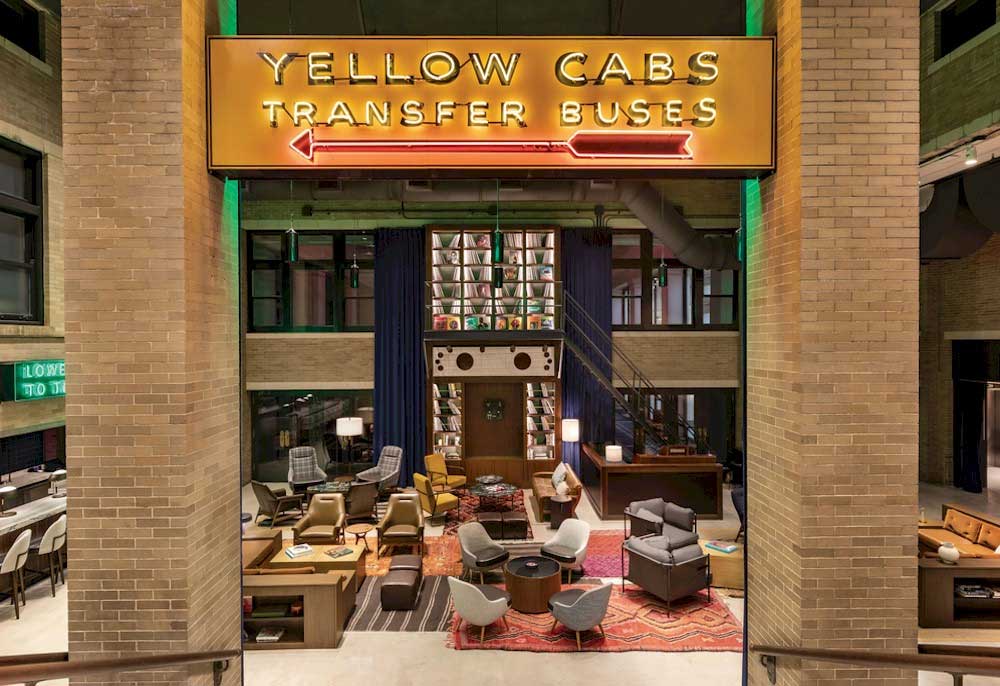
When industry analysts and travelers attempt to identify the best eco hotels for digital nomads, they frequently rely on flawed heuristics. The most common error is the conflation of “green aesthetics” with functional sustainability. A property adorned with natural materials and greenery might market itself as a premier destination for the eco-conscious professional, yet it may lack the robust infrastructure required for reliable remote work—such as redundant high-speed internet, ergonomic furniture, or acoustic isolation.
Conversely, the best eco hotels for digital nomads are those that treat productivity as an essential pillar of their operational design, not as an afterthought. Understanding these properties requires a multi-perspective audit: one must look past the “eco-certified” label and interrogate the property’s digital and physical reliability. The oversimplification risk here is the assumption that a remote worker can “adapt” to suboptimal conditions. For a professional, productivity is non-negotiable; therefore, the “best” properties are those that successfully overlay high-performance work-life amenities onto a foundation of circular resource management and community-integrated ecological stewardship.
Deep Contextual Background: The Evolution of Professional Mobility
The current landscape of remote-ready sustainable lodging is the result of three distinct evolutionary waves. The first wave was the “co-working movement,” which prioritized connectivity above all else, often neglecting the environmental cost of rapid construction and high-energy cooling. The second wave, driven by the rise of “conscious travel,” saw boutique hotels retrofitting rooms to accommodate travelers who were occasionally checking in on work. We are currently in the third wave: the era of “integrated professional hubs,” where sustainable properties are purpose-built or deeply retrofitted to serve long-term residents who require professional-grade stability in remote, often sensitive, ecological zones.
Conceptual Frameworks and Mental Models
-
The Stability/Sustainability Matrix: A framework that plots property performance on two axes: “Digital Reliability” (Wi-Fi, power, acoustics) and “Ecological Integrity” (waste, energy, water). The “best” properties exist in the high-performance quadrant of both.
-
The Contextual Integration Model: Evaluates whether the property’s sustainability efforts are disconnected from the local community or embedded within it (e.g., using local grid-offsetting cooperatives vs. independent, high-impact diesel generators).
-
The Lifecycle Productivity Model: Assesses the long-term viability of a property as a workspace, considering how it manages maintenance and upgrades without disrupting resident productivity.
Key Categories of Remote-Ready Sustainable Lodging
Properties serving the professional nomad can be broadly categorized based on their operational focus.
| Property Category | Work Focus | Eco-Focus | Best For |
| Eco-Hubs | Dedicated coworking | High | Deep-focus, team-based work |
| Boutique Stays | In-room ergonomics | Moderate | Solo, creative projects |
| Regenerative Retreats | Nature-integrated/minimalist | Very High | Off-grid, contemplative work |
| Community Residences | Shared resource/social | Moderate | Long-term cultural immersion |
The best eco hotels for digital nomads consistently prioritize the “Eco-Hub” or “Boutique Stay” classifications, as these models provide the necessary balance between specialized professional infrastructure and credible environmental stewardship.
Detailed Real-World Scenarios and Decision Points
-
Scenario: The Off-Grid Innovation Site. A property claims 100% solar power. The decision point for the nomad is the “uptime redundancy”—what happens during the rainy season or at night? The failure mode here is a lack of battery capacity, leading to internet outages during critical work hours.
-
Scenario: The Urban Sustainable Retrofit. A city-center hotel uses historic building techniques for insulation. The constraint is acoustic performance. Nomads must evaluate whether the “eco-friendly” structural materials provide the sound dampening required for client-facing calls.
-
Scenario: The Tropical Co-Living Hub. Focuses on hyper-local community integration. Second-order effects: The professional may gain deep cultural insights but must navigate the “seasonal availability” of high-speed infrastructure in less-developed rural areas.
Planning, Cost, and Resource Dynamics
The economic reality of these properties often includes a “sustainability premium” that is offset by long-stay discounts.
| Investment Category | Cost Profile | Value Add |
| IT/Communication | High CapEx/Maintenance | Critical for productivity |
| Circular Utilities | Very High CapEx/Low OpEx | Long-term savings/Brand value |
| Community Partnerships | Variable/Time-intensive | Cultural/Social capital |
When evaluating the best eco hotels for digital nomads, one must consider the opportunity cost of choosing a cheaper, non-sustainable property that may require expensive, redundant work-arounds (e.g., purchasing private 5G data plans or external power backups).
The Risk Landscape and Compounding Failure Modes
The “Integration Paradox” occurs when a property succeeds in sustainability but fails in professional reliability, or vice versa. A compounding failure arises when the property’s attempts to reduce energy use (e.g., automated lighting and HVAC timers) inadvertently shut down the nomadic worker’s equipment or work environment during focused hours. This demonstrates a failure in “user-centric design” within the eco-hotel model.
Governance, Maintenance, and Long-Term Adaptation
The management of these properties requires a “Feedback Loop Governance” approach.
-
Monitoring: Continuous sensor data for both resource usage and network latency.
-
Review Cycles: Biannual upgrades to hardware and software stacks, ensuring they meet current digital standards.
-
Layered Checklist: Verification of vendor partnerships—ensuring that even third-party service providers (e.g., internet providers, cleaning services) adhere to the property’s sustainability and performance mandates.
Measurement, Tracking, and Evaluation
Professional nomads should seek properties that provide:
-
Leading Indicators: Transparency reports on energy sources and average internet latency.
-
Qualitative Signals: Reviews that mention “work-day reliability,” not just “room comfort.”
-
Documentation: Clear policies on equipment support and workspace access, ensuring they are not just marketing claims but operational commitments.
Common Misconceptions and Oversimplifications
-
“High-speed internet is the only requirement.” Power stability, acoustic privacy, and ergonomic furniture are equally vital.
-
“Off-grid means offline.” Many off-grid properties now utilize sophisticated, low-impact satellite and energy storage systems that provide urban-grade reliability.
-
“Eco-hotels are only for short-term vacations.” The emergence of “long-stay eco-residences” challenges the idea that professional life must be anchored to traditional, high-consumption office environments.
Conclusion
The selection of the best eco hotels for digital nomads is an exercise in discerning the intersection of performance and stewardship. True efficacy in this space requires properties to move beyond the aesthetic of “green” to the engineering of resilience. As remote work becomes a foundational element of the global economy, the most successful properties will be those that view the digital nomad not merely as a guest, but as a long-term partner in the creation of a more sustainable and productive professional future. Achieving this necessitates a shift away from superficial labels toward a standard of excellence defined by verifiable data, operational reliability, and deep ecological integration.