Best Eco Hotels United States: A Professional Guide to Sustainable Hospitality
The American hospitality landscape is undergoing a structural transformation that mirrors broader shifts in infrastructure, energy policy, and consumer ethics. As travelers and institutional investors alike move away from the resource-intensive models that dominated the twentieth century, the criteria for “excellence” in lodging have evolved. The current standard is no longer defined by the volume of amenities or the complexity of mechanical comfort systems, but by the ability of a property to integrate seamlessly into its local ecosystem while maintaining high-performance operational standards.
Identifying the best eco hotels united states operators require a departure from conventional, surface-level industry accolades.This necessitates a deep, technical understanding of regional climate constraints, material durability, and the complex feedback loops that exist between the physical built environment and the surrounding landscape.
This article provides a rigorous, analytical examination of the high-performance hospitality sector in the United States. It is intended for stakeholders who view lodging as an evolving, multi-generational asset rather than a static product. By dismantling the complexities of sustainable development—from the thermodynamic behavior of building envelopes to the governance structures that ensure long-term operational resilience—this guide establishes a technical foundation for assessing, developing, and experiencing the most significant ecological advancements in American hospitality.
Understanding “best eco hotels united states”
The inquiry into the best eco hotels united states models often suffers from a lack of technical nuance, frequently conflating basic conservation efforts—such as low-flow plumbing or localized towel-reuse policies—with true ecological integration. To analyze this sector with appropriate rigor, one must recognize that environmental performance is a dynamic, site-specific optimization problem rather than a uniform standard. A development strategy that yields exceptional results in the temperate, high-humidity regions of the Pacific Northwest will be structurally and thermodynamically inadequate in the arid, high-temperature environment of the Southwestern desert.
Common misunderstandings center on the belief that environmental performance is a secondary attribute of a “green” hotel. In reality, the best eco hotels united states projects define sustainability as the primary design driver. Oversimplifying these metrics leads to the prevalence of “greenwashing by design,” wherein a property performs exceptionally well in theoretical energy models but fails to deliver sustained performance under the operational pressures of high occupancy and changing climate conditions.
Successful implementation requires a multidimensional perspective. It demands that stakeholders evaluate the property not as a discrete building on a site, but as a nexus of existing biological, hydrological, and energetic flows. The most resilient hotels are those that act as active, restorative participants within these flows, effectively managing resource inputs and outputs through intelligent engineering and long-term, data-driven governance.
Deep Contextual Background: The Evolution of Regenerative Lodging
The trajectory of sustainable hospitality in the United States has progressed through three distinct phases of development. The initial phase, categorized as “harm reduction,” prioritized basic conservation techniques. During this period, the industry focused on mitigating the most egregious inefficiencies through simple, often superficial, interventions. While these initiatives provided necessary awareness, they did not alter the fundamental structural reliance on resource-intensive, extractive energy models.
The second phase introduced formalized certification regimes. Agencies and organizations began implementing rigorous benchmarks (e.g., LEED, BREEAM, and WELL standards). While this led to significant improvements in technical construction quality and accountability, it also fostered a “points-chasing” mentality. In this environment, the primary goal for developers was often to secure specific certifications for marketing purposes, occasionally at the expense of optimizing the building for its unique site-specific conditions.
We are currently entering the third phase: regenerative design. The best eco hotels united states models are now shifting toward a net-positive framework. The mandate has evolved from minimizing negative externalities to actively improving the site’s ecological health. This involves integrating carbon-sequestering materials, advanced on-site energy generation, and active restoration of biodiversity. It represents a fundamental transition from an extractive, linear model to a symbiotic, circular one.
Conceptual Frameworks and Mental Models
To manage the inherent complexities of high-performance hospitality, developers and operators utilize structured mental models to guide decision-making and project evolution.
-
The Circular Economy Framework: This model dictates that every material component—from the foundational structural elements to the guest room fixtures—is designed for recovery, reuse, or biological degradation. It requires a cradle-to-cradle lifecycle analysis during the project’s conceptual phase.
-
Biophilic Design Theory: By leveraging human evolutionary psychology, this model optimizes structural layouts to maximize natural lighting, cross-ventilation, and physical connection to natural elements. This directly reduces mechanical energy loads while enhancing occupant wellness.
-
Passive House (Passivhaus) Principles: This approach focuses on the extreme efficiency of the building envelope. Through superior insulation, airtightness, and the elimination of thermal bridges, the requirement for mechanical climate control is reduced to a fraction of the industry baseline.
-
Systems Thinking Dynamics: This approach manages water, energy, and waste as an interconnected loop.
Categorizing High-Performance Hospitality Models
Development strategies in the United States typically diverge into several distinct categories, each presenting unique trade-offs and operational requirements.
| Model Category | Primary Performance Driver | Best Application Setting | Key Strategic Trade-off |
| Passive-Modular | Envelope Efficiency | Modular/Remote sites | Limited architectural flexibility |
| Adaptive Reuse | Structural Longevity | Urban/Historical cores | Complex regulatory navigation |
| Net-Positive Hub | Energy Generation | Isolated/Rural resorts | High initial capital intensity |
| Vernacular/Low-Impact | Material Sourcing | Cultural/Sensitive sites | Higher ongoing maintenance |
Selecting the correct path requires a rigorous evaluation of regional and environmental constraints. For example, the best eco hotels united states projects in dense urban areas often prioritize adaptive reuse to preserve embodied carbon, whereas remote developments may prioritize net-positive energy generation. Stakeholders must weigh these models against local regulatory frameworks, available supply chains, and the long-term technical expertise available for facility maintenance.
Real-World Scenarios and Decision Logic
Consider the development of a remote mountain resort. The temptation to maximize glazing for panoramic views poses a significant thermodynamic risk. A rigorous design strategy would dictate that the heat gain or loss through these facades necessitates an oversized, carbon-heavy mechanical system. The decision logic here forces a critical trade-off: either reduce window-to-wall ratios and utilize high-performance, vacuum-sealed glazing, or accept higher energy costs and increased structural complexity.
In another scenario—a desert-based property—water scarcity serves as the primary constraint. A conventional approach might rely on energy-intensive desalinization. However, a more sophisticated strategy would prioritize deep-subterranean heat exchange and atmospheric water generation, coupled with dry-landscape management that utilizes endemic species. These techniques effectively lower long-term operational costs and environmental stress.
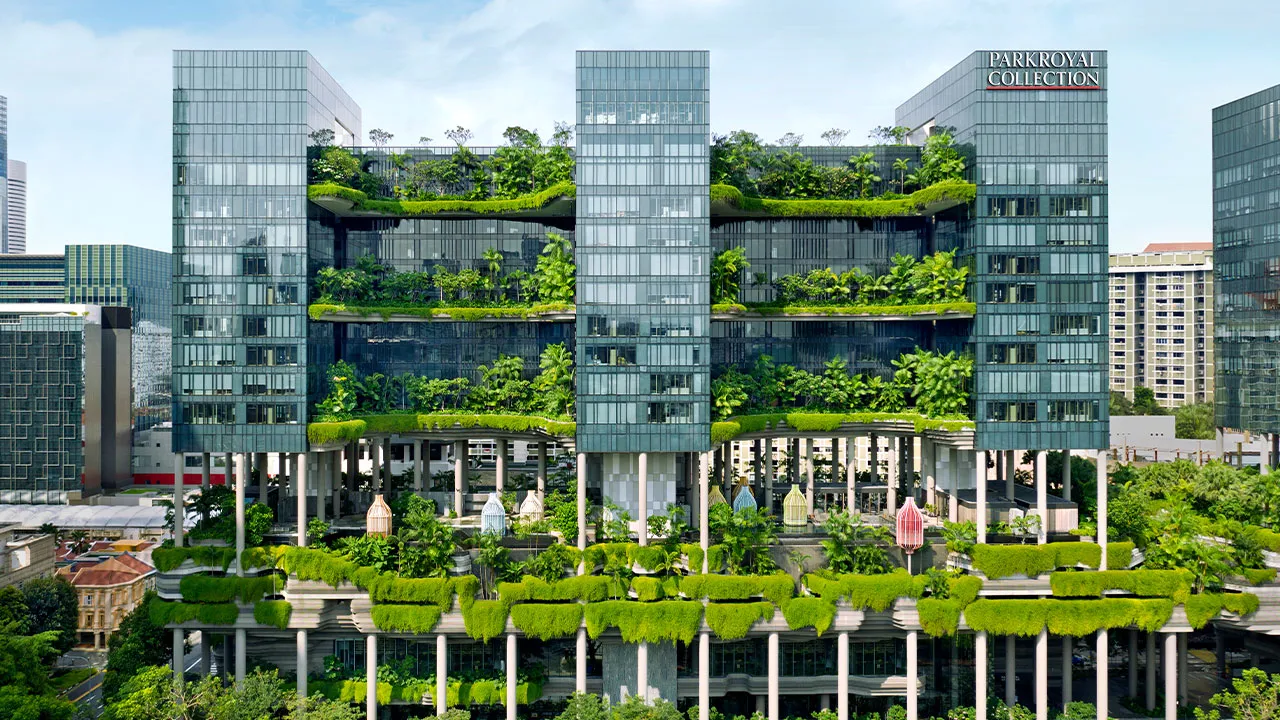
In urban settings, the challenge shifts toward density. The integration of green roofs and vertical forests is less about achieving absolute carbon neutrality and more about mitigating the urban heat island effect. The best eco hotels united states urban projects utilize these features for their second-order effects on micro-climate regulation and improved guest comfort, which provides significant competitive value.
Planning, Cost, and Resource Dynamics
The economic profile of high-performance hospitality is often misunderstood, particularly regarding the divergence between initial capital expenditure (CAPEX) and long-term operational expenditure (OPEX). While initial investments for these projects are frequently 15% to 25% higher than conventional construction due to specialized materials, the long-term operational savings are profound and provide resilience against volatile utility pricing.
-
Direct Costs: High-performance insulation materials, intelligent building management systems (BMS), and specialized engineering consultants.
-
Indirect Costs: Increased due-diligence periods, complex multi-jurisdictional permitting, and the necessity for a specialized, highly trained construction labor force.
-
Opportunity Costs: Foregone revenue from smaller, more efficient floor plans that prioritize envelope thickness over maximum square footage.
| Cost Element | Conventional Project | High-Performance Project |
| Initial CAPEX | Baseline ($X$) | $1.2X – 1.3X$ |
| Energy OPEX | High/Volatile | Low/Predictable |
| Maintenance Cycle | Short-term/Reactive | Long-term/Proactive |
Tools, Strategies, and Support Systems
Successful development and maintenance rely on an integrated, high-precision toolkit:
-
Building Information Modeling (BIM): Utilizing energy-simulation plug-ins to predict the thermodynamic performance of a design before the first foundation is poured.
-
Life Cycle Assessment (LCA) Software: Quantifying the total carbon impact of all material choices to identify hotspots in the supply chain.
-
On-site Micro-grid Management: Leveraging local renewable energy generation to balance loads and maintain grid independence.
-
Smart-metering IoT Sensor Networks: Enabling granular, real-time tracking of utility usage across the entire facility.
-
Permeable Paving and Engineered Bioswales: Managing local hydrological patterns to prevent erosion and recharge local water tables.
-
Regional Material Databases: Identifying and sourcing high-quality materials within a narrow geographic radius to minimize transport-related embodied carbon.
Risk Landscape and Failure Modes
The primary risks when identifying the best eco hotels united states operators rarely relate to technology failure. They are almost exclusively related to systemic integration and human error.
Similarly, the “Performance Gap” represents the discrepancy between the design model’s energy predictions and the reality of guest behavior. If guest-facing interfaces are not intuitive, occupants will override automated efficiency settings, leading to significant efficiency losses and potential equipment degradation.
Supply chain fragility presents an additional, constant risk. Relying on niche, high-performance materials often means that local secondary markets for parts and replacements are non-existent. This makes long-term replacement cycles potentially impossible without significant, carbon-intensive shipping and logistical support.
Governance, Maintenance, and Long-Term Adaptation
High-performance buildings are not finished products; they are living systems that require active, ongoing management. The most effective developers implement a rigorous post-occupancy evaluation (POE) program to ensure the facility meets its design intent.
-
Performance Review Cycles: Implementing quarterly audits of building performance data to compare real-time utility usage against baseline design targets.
-
Adjustment Triggers: Establishing predefined thresholds where, if energy usage deviates by more than 5% from the model, a diagnostic process is triggered to identify structural or operational failures.
-
Maintenance Layering: Developing three distinct tiers of maintenance: daily (guest-facing, simple), monthly (systems-level, sensor and calibration checks), and annual (deep-system optimization and component replacement).
Measurement, Tracking, and Evaluation
To move beyond the limitations of standard metrics, project leaders must employ a robust combination of leading and lagging indicators.
-
Leading Indicators: Real-time data from indoor air quality monitors, light-level sensors, and structural moisture detectors in critical, high-risk points.
-
Lagging Indicators: Total annualized carbon output per guest-night, localized biodiversity indices (using periodic ecological surveys), and long-term water-table stability measurements.
-
Documentation: Maintaining a “Living Building Manual” that tracks every material input, which enables a true, efficient end-of-life deconstruction plan rather than a simplistic, resource-heavy demolition process.
Common Misconceptions and Oversimplifications
-
“Gold-level certification equals a sustainable building.” Correction: Certification is a snapshot of design intent; it does not guarantee operational reality.
-
“High-tech is always better.” Correction: Often, the most sustainable solution is passive—thick walls and strategic shading—which requires almost zero maintenance.
-
“Eco-hotels cannot be luxurious.” Correction: True luxury is increasingly defined by the exclusivity of the environment and the purity of the guest experience, not by excessive consumption.
-
“Sustainability is a cost center.” Correction: Over a 20-year horizon, efficiency-focused construction is a potent risk-mitigation strategy.
-
“Eco-friendly design limits architectural expression.” Correction: Many iconic contemporary designs are only made possible by advancements in materials like cross-laminated timber.
-
“Guests do not care about the details.” Correction: Guests are highly sensitive to indoor air quality, acoustics, and natural lighting, all of which are direct outcomes of superior planning.
Conclusion
The pursuit of meaningful development in the hospitality sector requires that one understands the best eco hotels united states by looking far beyond superficial labeling. It demands an editorial mindset that constantly edits, refines, and challenges the initial assumptions of the design and operations teams. The ultimate objective is to create structures that contribute to, rather than consume, their surroundings, ensuring that the development remains a viable, high-value asset for many decades. By integrating deep contextual understanding with rigorous, evidence-based engineering, stakeholders can move past the limitations of current market trends and establish a new, durable standard for responsible American hospitality.