How to manage eco hotels certifications: A Professional Guide to Sustainable Hospitality
The contemporary hospitality landscape is undergoing a profound structural shift. As environmental imperatives move from the periphery of corporate social responsibility to the core of operational viability, the demand for sophisticated, regenerative building practices has outpaced standard construction methodologies. Investors, architects, and hoteliers now face a landscape where “green” is no longer a marketing aesthetic but a technical discipline requiring rigorous integration of energy-positive systems, circular resource management, and social equity.
Designing and executing a project within this sector requires moving beyond the simple installation of energy-efficient fixtures or waste reduction protocols. True sustainability in lodging demands an interrogation of the site’s entire lifecycle, from the carbon footprint of structural materials to the long-term impact on local hydrology and biodiversity.
The following analysis provides an exhaustive framework for understanding the development, implementation, and long-term management of high-performance hospitality environments. By dismantling the complexities of site selection, material science, and operational governance, this document serves as a foundational reference for achieving genuine, measurable environmental integration.
Understanding “how to manage eco hotels certifications”
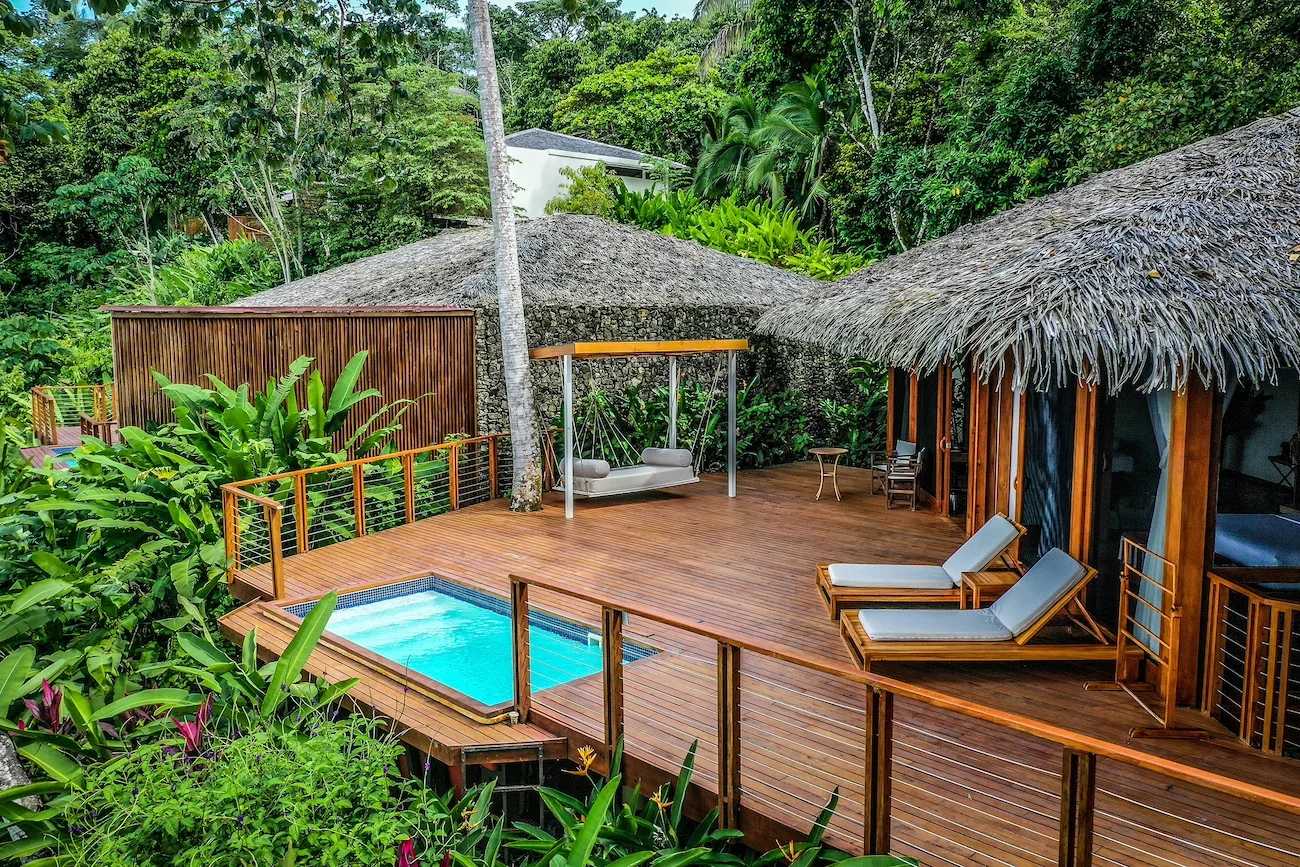
The phrase how to manage eco hotels certifications is frequently misappropriated in industry literature, often functioning as a catch-all for any project that includes basic solar panel arrays or greywater recycling. To understand these credentials with the necessary technical rigor, one must first recognize that true sustainability is a dynamic, site-specific optimization problem rather than a static checklist. A plan that excels in a tropical coastal environment—prioritizing passive cooling and saline-resistant bio-materials—will be structurally and energetically incoherent in an alpine or arid region.
Common misunderstandings center on the idea that certification is a finite goal. In reality, learning how to manage eco hotels certifications must be viewed as a process-oriented strategy. Evaluations must account for the degradation of materials over time, the shifting climate variables of the specific geography, and the evolution of local community requirements. When these certifications are oversimplified, they often fall into the trap of “greenwashing by design,” where the building achieves a high efficiency rating during its first year of operation but lacks the robust management systems necessary to maintain that performance under the stress of high guest volume and environmental wear.
Successful implementation requires a multidimensional perspective: architectural, biological, economic, and cultural. It requires the developer to look at the site not as a blank canvas but as a set of existing flows—of water, energy, and social interaction—that the development must enhance rather than interrupt.
Deep Contextual Background: The Evolution of Regenerative Lodging
The trajectory of sustainable hospitality has moved through three distinct phases. The first phase, characterized by “harm reduction,” focused primarily on energy and water conservation. This was the era of towel-reuse programs and low-flow plumbing—incremental changes that, while beneficial, did not fundamentally alter the ecological footprint of the physical structure.
The second phase introduced sustainable certification regimes. Programs like LEED, BREEAM, and various regional green-building standards forced developers to adopt standardized, measurable benchmarks. This period improved the technical quality of construction but also encouraged a “points-chasing” mentality, where the primary objective was securing a certificate rather than optimizing the building’s unique ecological performance.
We are now entering the third phase: regenerative design. In this context, determining how to manage eco hotels certifications is no longer assessed solely on the ability to minimize harm but on the capacity to act as a restorative agent within an ecosystem. This involves net-positive energy production, active carbon sequestration in construction materials, and the restoration of local soil health and biodiversity. It is a transition from an extractive development model to a symbiotic one.
Conceptual Frameworks for Sustainable Development
To manage the complexity inherent in these projects, developers should utilize structured mental models to guide decision-making.
The Circular Economy Model mandates that every material used in the construction and operation of the hotel—from structural timber to guest amenities—is designed for recovery, reuse, or complete biological decomposition. This necessitates a “cradle-to-cradle” supply chain analysis at the earliest stages of planning.
Biophilic Design Theory uses human evolutionary preference for natural environments to drive structural layout. It reduces mechanical ventilation needs by optimizing airflow and natural lighting, directly impacting energy consumption while simultaneously improving guest psychological well-being.
The Passive House (Passivhaus) Principle focuses on extreme envelope efficiency. By prioritizing high-performance insulation, airtightness, and thermal bridging prevention, the reliance on active mechanical heating and cooling systems is nearly eliminated, which is the primary energy drain in global hospitality.
Systems Thinking treats water, energy, and food as an interconnected loop. For example, the waste heat from a refrigeration system is used to heat domestic water, which then feeds into a hydroponic system, reducing the need for external food procurement.
Categorizing High-Performance Hospitality Models
Development strategies typically diverge into several distinct categories, each with its own set of trade-offs.
| Model Category | Primary Driver | Best Application | Key Trade-off |
| Passive-Modular | Energy efficiency | Modular sites, remote areas | Limited design flexibility |
| Bio-Refurbishment | Adaptive reuse | Urban, historical sites | Complex regulatory navigation |
| Net-Positive Hub | Energy generation | Isolated, rural resorts | High initial capital intensity |
| Low-Impact Vernacular | Material sourcing | Cultural heritage sites | Higher maintenance requirements |
Selecting the correct path requires a rigorous evaluation of the site’s constraints. A net-positive hub in an urban environment may be physically impossible due to spatial constraints, whereas a bio-refurbishment project in a remote, high-biodiversity area might ignore the potential for significant ecological restoration. When analyzing how to manage eco hotels certifications, stakeholders must weigh these models against local regulatory frameworks and long-term maintenance capabilities.
Real-World Scenarios and Decision Logic
Consider the development of a remote mountain resort. The initial instinct might be to maximize glass surface area for views. However, a rigorous approach to how to manage eco hotels certifications would dictate that the thermal loss through massive glass facades necessitates an oversized, carbon-heavy mechanical heating system. The decision logic here forces a trade-off: reduce window-to-wall ratios and utilize high-performance glazing, or accept higher energy costs and greater structural complexity.
In another scenario—a desert-based property—the primary constraint is water. A conventional approach might involve desalinization, which is energy-intensive. A more sophisticated plan would prioritize deep-subterranean heat exchange and atmospheric water generation, coupled with dry-landscape management that mimics natural desert hydrology, thereby lowering the long-term operational cost and environmental stress.
In urban settings, the challenge shifts to density. Integrating green roofs and vertical forests is often less about absolute carbon neutrality and more about mitigating the urban heat island effect, which has second-order effects on local micro-climates and guest comfort.
Resource Dynamics and Cost Structures
The economic profile of these projects is often misunderstood. While initial capital expenditure (CAPEX) is frequently 15% to 25% higher than conventional construction due to specialized materials and integrated engineering, the long-term operational expenditure (OPEX) is significantly lower and more resilient to utility cost fluctuations.
-
Direct Costs: High-performance materials, intelligent building management systems (BMS), and specialized engineering consultants.
-
Indirect Costs: Increased due-diligence periods, complex permitting processes, and the need for a specialized labor force during construction.
-
Opportunity Costs: Foregone revenue from smaller floor plans necessitated by thicker, higher-insulation wall assemblies.
| Cost Element | Conventional Project | High-Performance Eco-Project |
| Initial CAPEX | Baseline ($X$) | $1.2X – 1.3X$ |
| Energy OPEX | High/Volatile | Low/Predictable |
| Maintenance Cycle | Short-term fixes | Long-term systems monitoring |
Tools, Strategies, and Support Systems
Successful development relies on a specific toolkit:
-
Building Information Modeling (BIM) with energy-simulation plug-ins to predict thermodynamic performance.
-
Life Cycle Assessment (LCA) software to quantify the carbon impact of material choices.
-
On-site micro-grid management platforms to balance intermittent renewable energy supply.
-
Smart-metering IoT sensor networks for granular utility tracking.
-
Permeable paving and bioswales for local hydrological management.
-
Localized material sourcing databases to minimize embodied transport carbon.
Risk Landscape and Failure Modes
The primary risks when exploring how to manage eco hotels certifications are rarely related to technology failure; they are almost exclusively related to systems integration and human error.
The “Complexity Trap” occurs when a system is designed to be so advanced that on-site maintenance staff lack the training to repair it when it drifts from optimal parameters. Similarly, the “Performance Gap” represents the discrepancy between the design model’s energy prediction and actual guest behavior. If guest-facing systems are not intuitive, occupants will override automated efficiency settings, leading to massive efficiency losses.
Supply chain fragility is a constant risk. Relying on niche, high-performance materials often means they lack local secondary markets, making long-term replacement cycles impossible without significant carbon-heavy shipping.
Governance and Long-Term Operational Adaptation
A building is not a finished product; it is a live system. Successful developers implement a rigorous post-occupancy evaluation (POE) program.
-
Review Cycles: Quarterly audits of building performance data, comparing actual utility usage against the baseline design targets.
-
Adjustment Triggers: If energy usage deviates by more than 5% from the model, a diagnostic process is triggered to identify whether the issue is structural or operational.
-
Maintenance Layering: Establish three tiers of maintenance: daily (guest-facing, simple), monthly (systems-level, sensor checks), and annual (deep-system optimization).
Measurement, Tracking, and Impact Evaluation
To move beyond the limitations of standard metrics, project leaders must employ a combination of leading and lagging indicators.
-
Leading Indicators: Real-time sensor data from indoor air quality monitors, light-level sensors, and moisture detectors in critical structural points.
-
Lagging Indicators: Total annualized carbon output per guest-night, localized biodiversity indices (using ecological surveys), and long-term water-table stability.
-
Documentation: Maintain a “Living Building Manual” that tracks all material inputs, enabling a true end-of-life deconstruction plan rather than a demolition plan.
Common Misconceptions and Systemic Myths
-
“Gold-level certification equals a sustainable building.” Correction: Certification is a snapshot of design intent; it does not guarantee operational reality.
-
“High-tech is always better.” Correction: Often, the most sustainable solution is passive—thick walls and strategic shading—which requires no maintenance.
-
“Eco-hotels cannot be luxurious.” Correction: True luxury is increasingly defined by the exclusivity of the environment and the purity of the experience.
-
“Sustainability is a cost center.” Correction: Over a 20-year horizon, efficiency-focused construction is a risk-mitigation strategy.
-
“Eco-friendly design limits architectural expression.” Correction: Many of the most iconic contemporary designs are only possible due to structural advances like mass timber.
-
“Guests do not care about the details.” Correction: Guests are highly sensitive to the indoor air quality, acoustics, and natural lighting—all direct results of superior eco-conscious planning.
Conclusion
The pursuit of meaningful hospitality development requires that one understands how to manage eco hotels certifications by looking past superficial labeling. It demands an editorial mindset that constantly edits, refines, and challenges the assumptions of the design team. The objective is to create structures that contribute to, rather than consume, their surroundings, ensuring that the development remains a viable and valuable asset for decades.