Boutique Eco Hotels USA: A Guide to Authentic Sustainable Luxury
The hospitality sector within the United States is currently navigating a period of profound redefinition. For decades, the domestic travel market prioritized consistency, scale, and the near-total elimination of environmental variability through energy-intensive mechanical intervention. However, a significant cohort of travelers is now rejecting this homogenized paradigm, seeking instead a style of accommodation that emphasizes place-based authenticity and structural ecological responsibility. This shift has elevated the significance of independent, smaller-scale properties capable of agile, site-specific responses to the challenges of modern tourism.
True sustainability in this context is rarely a matter of simple surface-level choices. It requires a fundamental rethinking of how a physical asset interacts with its host environment, from water management and energy sourcing to the preservation of local biodiversity and the support of regional socio-economic structures. The proliferation of the term “eco” in marketing collateral has, unfortunately, introduced a high degree of ambiguity, making it difficult for the discerning traveler to distinguish between genuine, regenerative hospitality and properties that merely utilize sustainable aesthetics as a branding tool.
This article provides an analytical framework for evaluating the landscape of boutique eco hotels usa developments. It moves beyond the common tendency to view these properties as mere vacation choices, framing them instead as complex, adaptive systems that reflect the diverse geological, climatic, and cultural realities of the American continent. By examining the operational, mechanical, and philosophical foundations of these properties, we can identify those that successfully integrate the demands of high-end hospitality with a substantive, data-driven commitment to environmental stewardship.
Understanding “boutique eco hotels usa”
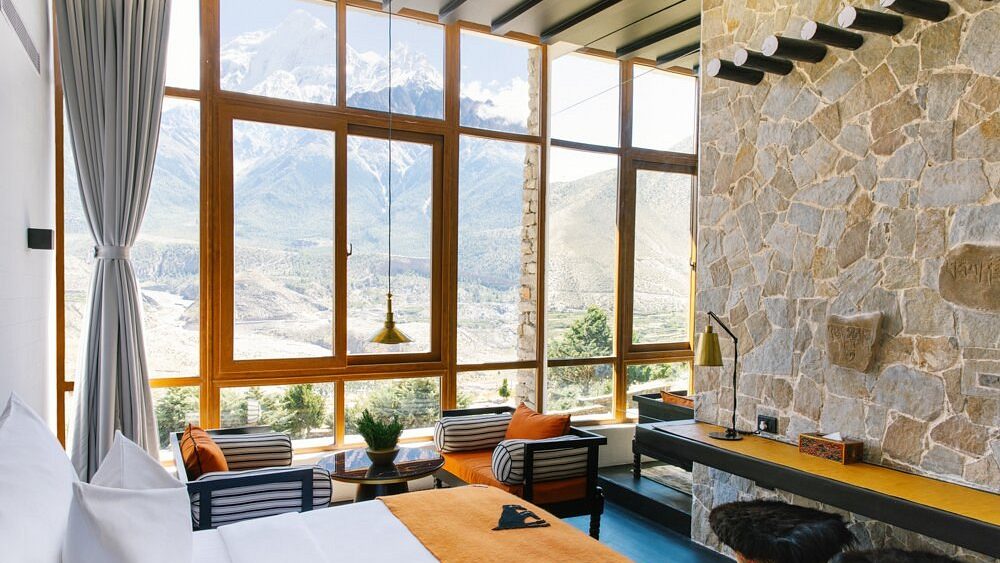
When evaluating the sector of boutique eco hotels usa properties, it is essential to move past the superficial definitions often promoted in travel media. A boutique establishment in this space is characterized by its scale, which typically allows for a more granular level of operational control than large-scale resort complexes. This scale, however, is a double-edged sword; while it permits the implementation of highly customized sustainability protocols, it also requires a significantly higher degree of management expertise to maintain those systems over time.
Common misunderstandings arise from the conflation of “nature-adjacent” with “nature-positive.” A hotel may be located in a scenic, pristine forest—providing the aesthetic appeal of an eco-retreat—while functioning as a completely extractive entity that imports all of its food, exports all of its waste, and relies on carbon-intensive climate control. To understand boutique eco hotels usa is to look for the “absent evidence” of impact. The most robust properties are those that have reconciled the luxury of the guest experience with the hard limits of their local environment, often through bioclimatic architecture that minimizes the need for mechanical intervention in the first place.
Deep Contextual Background
The trajectory of sustainable hospitality in the United States has evolved from peripheral, counter-culture efforts in the 1970s to a more institutionalized, though still fragmented, approach. Initially, properties that prioritized ecological health were often viewed as “alternative”—frequently sacrificing modern comforts for environmental integrity. This bifurcation persisted for years, creating a divide between high-end conventional luxury and the rugged eco-lodge experience.
Today, we are witnessing a synthesis. The modern American boutique eco-hotel is increasingly defined by its ability to provide world-class service while operating as a closed-loop system. This evolution is driven by several factors: the increasing cost of energy, the growing regulatory focus on water and waste in sensitive ecosystems, and a market shift where younger demographics prioritize the ethical footprint of their travel spend. As a result, the properties that lead this field now rely on sophisticated engineering, data-driven resource management, and a deep, systemic commitment to the restoration of their immediate surroundings.
Conceptual Frameworks and Mental Models
To assess these properties, apply the following frameworks:
-
Bioclimatic Integration: This assesses the building’s physical ability to manage temperature and air quality without mechanical intervention. High-performing properties utilize thermal mass, shading, and natural cross-ventilation as primary tools.
-
Circular Nutrient Mapping: This framework evaluates how the hotel manages organic waste. Does the property compost on-site to enrich the soil for their own gardens, or does it ship “waste” to a landfill, thereby removing nutrients from the local cycle?
-
The Proximity Metric: This is the distance between the hotel’s resource inputs—food, materials, and labor—and the site itself. High-integrity properties are rooted in their local economies, whereas low-integrity properties function as isolated, imported bubbles.
-
Operational Resilience: This examines the property’s ability to function independently of municipal grids during peak loads or environmental shifts, which is a hallmark of truly autonomous sustainable design.
Key Categories and Variations
| Category | Typical Landscape | Operational Focus |
| Arid/Desert Retreats | High solar potential | Water reclamation, passive thermal mass |
| Forest/Montane Lodges | High biomass access | Local timber, on-site compost/biogas |
| Coastal/Adaptive Reuse | High climate sensitivity | Wave/wind energy, wetland preservation |
| Rural Agri-Hotels | Productive agricultural land | Farm-to-table circularity, soil restoration |
Realistic Decision Logic
When evaluating options within the boutique eco hotels usa market, one must prioritize the property’s environmental “baseline.” If a property claims sustainability, look for evidence of operational data: annual reports on energy usage, waste diversion ratios, and specific project timelines for habitat restoration. A property that cannot provide this information is likely managing for aesthetic optics rather than systemic impact.
Real-World Scenarios and Decision Logic
Scenario 1: The High-Desert Solar-Dependent Lodge
-
Constraint: Extreme water and energy scarcity.
-
Decision Point: Prioritizing aesthetic landscaping versus low-water xeriscaping.
-
Failure Mode: A property that uses imported water to maintain a lush, non-native garden is effectively negating its own energy-positive claims.
-
Second-Order Effect: The use of drought-tolerant, native landscaping preserves local biodiversity and eliminates the need for imported chemical fertilizers.
Scenario 2: The Adaptive Reuse Historical Property
-
Constraint: Significant limitations on building envelope modifications.
-
Decision Point: Choosing high-efficiency mechanical plant upgrades over lobby renovation.
-
Failure Mode: The “green” label is used as a cover for a high-consumption, energy-leaking historical shell that cannot be truly optimized.
-
Second-Order Effect: The successful conversion of these properties often requires a long-term, multi-year energy audit strategy that prioritizes the most leaking points of the building first.
Planning, Cost, and Resource Dynamics
Sustainable hospitality often operates at a premium because it accurately prices the cost of ethical sourcing, fair labor, and advanced waste management.
-
Direct Costs: Higher operational overhead due to the premium on organic, regional, and non-toxic inputs.
-
Opportunity Cost: Choosing the most advanced boutique eco hotels usa properties may involve a trade-off with the convenience of global chain standardizations.
-
Lifecycle Value: These properties often have significantly lower long-term volatility in energy and resource costs, as they are decoupled from the fluctuating prices of municipal grids.
| Maturity Level | Typical Focus | Capital Priority |
| Foundational | Waste diversion, local staffing | Low/Moderate |
| Systemic | Renewable energy, water cycles | High/Long-term |
| Regenerative | Habitat, soil, economic anchor | Very High/Strategic |
Risk Landscape and Failure Modes
The primary risk in this sector is “systemic decoupling,” where the management’s environmental mission is not reflected in the building’s physical maintenance. A common failure mode occurs when ownership changes, and the property’s focus shifts from regenerative operations to cost-cutting, which quickly erodes the sustainability features that were initially implemented. Furthermore, the risk of regulatory drift—where property managers assume that a basic certification is the end-state of their sustainability efforts—prevents the continuous improvement required to maintain true ecological integrity.
Governance, Maintenance, and Long-Term Adaptation
Properties with genuine integrity treat their sustainability systems as mission-critical. This requires a rigorous, data-driven governance model:
-
Continuous Auditing: A quarterly review of resource consumption metrics to identify leaks in the system.
-
Adaptive Triggers: The management team must be empowered to modify guest services—such as limiting pool hours or altering menus—based on real-time resource availability.
-
The Layered Checklist:
-
Verify the functional state of gray-water filtration annually.
-
Review procurement contracts to ensure regional sourcing remains at the target percentage.
-
Assess staff understanding of the conservation philosophy; the team is the primary steward of the system.
-
Measurement, Tracking, and Evaluation
True operational mastery is demonstrated through granular documentation. A lead-indicator property will publicly or internally report:
-
Energy-per-guest-night: Normalized against seasonal and occupancy fluctuations.
-
Waste-diversion metrics: The mass of composted or recycled material compared to landfill waste.
-
Supply-chain proximity: The percentage of total procurement volume sourced within a 100-mile radius.
Common Misconceptions and Oversimplifications
-
“Eco” equals “Rustic”: Modern engineering allows for total luxury while maintaining high-performance environmental standards.
-
Certification equals Stewardship: Labels are snapshots; continuous, site-specific engagement is the reality of true stewardship.
-
Offsets fix the footprint: True sustainability begins with reduction and optimization, not the purchase of carbon credits.
-
Size is the factor: Small lodges can be highly extractive if poorly managed, and large properties can be highly efficient through systemic scale.
-
Aesthetics are the priority: The most beautiful property is often the one that integrates seamlessly and invisibly into its environment.
Conclusion
The pursuit of the finest boutique eco hotels usa properties requires a fundamental shift in the traveler’s evaluative lens. By moving beyond the visual surface of “nature-friendly” tropes, one can identify properties that operate as genuine, responsible members of their ecosystems. As the industry matures, these regenerative properties will increasingly serve as the benchmark for responsible hospitality, proving that it is possible to offer exceptional comfort while fostering the health of the very environments that host us.