American Eco Reef Hotels: A Guide to High-Integrity Marine Hospitality
The health of North American coral ecosystems, particularly within the Florida Keys and protected Caribbean territories, represents an acute frontier of environmental management. As anthropogenic pressure—manifesting through climate-driven bleaching, coastal runoff, and physical degradation—reaches critical thresholds, the hospitality industry finds itself in a paradoxical position. Properties situated near these sensitive maritime zones have historically acted as primary drivers of localized ecosystem stress.
The transition from a “coastal-adjacent” business model to a “marine-integrated” stewardship model is not merely a branding exercise; it is an engineering and ecological necessity. For a property to legitimately claim status as a leader in this sector, it must do more than avoid damage. It must function as an active participant in reef health, utilizing its infrastructure to facilitate scientific data collection, coral outplanting, and the mitigation of terrestrial sediment flow. This requires a fundamental redesign of how these establishments interact with the water, shifting from the commodification of the reef to the active investment in its resilience.
This analysis provides a rigorous, technical framework for evaluating the operational and ecological validity of facilities that position themselves as stewards of the marine environment. By dismantling the logistical realities of high-integrity coral stewardship, this guide serves as a diagnostic tool for researchers, conservationists, and discerning travelers to identify the structures that are genuinely performing as regenerative assets rather than passive observers of collapse.
Understanding “american eco reef hotels”
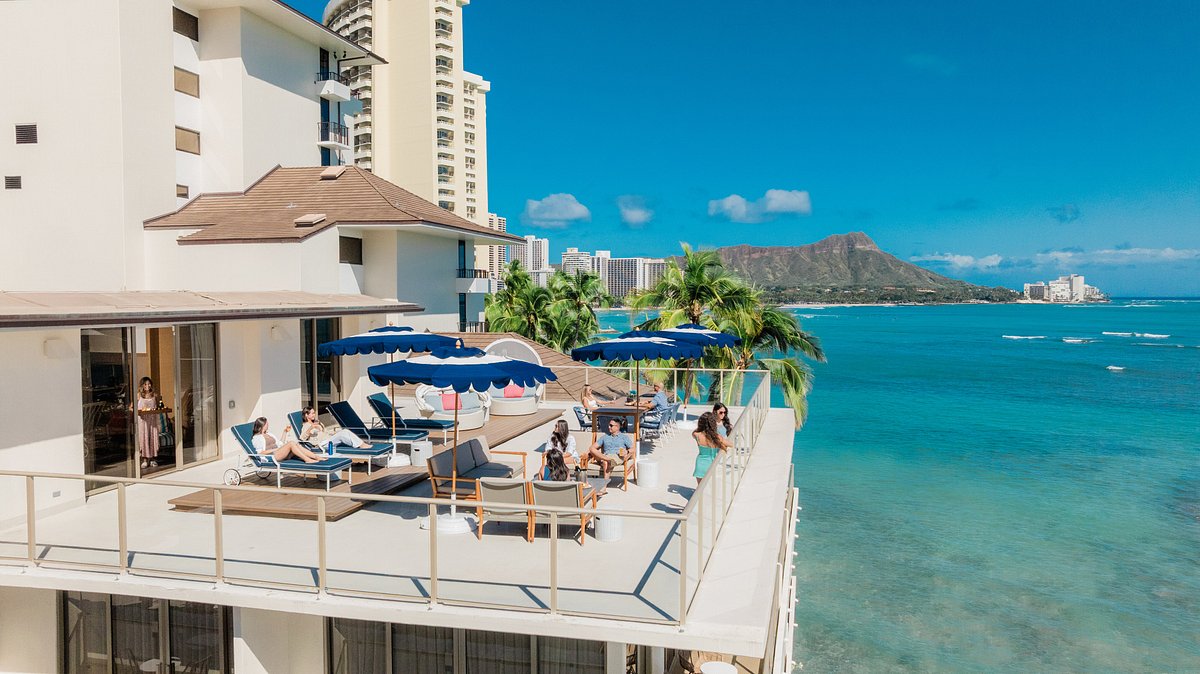
When we critically assess american eco reef hotels, we are evaluating a hybrid system that attempts to reconcile high-density human activity with the extreme fragility of calcifying marine organisms. The most common misunderstanding here is the “barrier-free” fallacy: the belief that as long as a facility avoids direct physical contact with a reef (e.g., anchoring on it), it is acting sustainably. This ignores the silent, cumulative impacts—such as the discharge of nutrient-rich wastewater that triggers algae blooms, or the chemical impact of sunscreen additives—which can be as devastating to a coral colony as direct mechanical impact.
The risk of oversimplification lies in the conflation of “scenic proximity” with “ecological alignment.” An establishment may possess a prime view of a reef, yet its daily operations—including high-frequency laundry turnover, extensive desalination brine discharge, and private boat charter operations—may be actively working against the reef’s survival. Authentic american eco reef hotels are defined by their internal plumbing, their energy-neutral maritime logistics, and the extent to which their revenue directly finances, rather than just markets, coral restoration efforts.
Deep Contextual Background: The Evolution of Marine Hospitality
The trajectory of reef-adjacent development in the United States has evolved from the “Extraction Phase,” where proximity to vibrant reefs was exploited for trophy-fishing and high-volume tourism, to the current “Restoration-Integrated Phase.” Historically, development was driven by the exploitation of the “blue economy.” Today, however, the existential threat posed by mass bleaching events has forced a structural pivot.
Conceptual Frameworks and Mental Models
-
The Nutrient-Load Threshold: A model that calculates the maximum daily nitrogen and phosphorus output allowable from a property before local coral ecosystems face hyper-eutrophication.
-
The Hydrodynamic Integration Model: Assesses how the facility’s physical structure (docks, piers, seawalls) disrupts natural water flow, sediment transport, and larval dispersal.
-
The Regenerative Dividend: Measures the ratio of a property’s “profit-from-extraction” versus “investment-in-restoration.”
Key Categories of Coral-Adjacent Hospitality
| Category | Primary Focus | Ecological Impact | Complexity |
| Research Hubs | Data collection/Genetic banks | Positive (Restorative) | Very High |
| Outplanting Bases | Active coral fragment planting | Positive (Restorative) | High |
| Closed-Loop Facilities | Net-zero waste/water cycles | Neutral (Mitigative) | High |
| Policy-Aligned Resorts | Regional conservation funding | Moderate | Medium |
For a facility to qualify among the american eco reef hotels that truly matter, it must operate primarily as a “Research Hub” or “Outplanting Base,” where guests participate in, or at least witness, the scientific labor of reef restoration.
Detailed Real-World Scenarios
-
Scenario: The Brine Discharge Conflict. A resort uses on-site desalination. Failure mode: The hyper-saline brine discharge alters local osmotic pressure, killing nearby coral recruits. Solution: Multi-stage diffusion systems that ensure rapid dilution.
-
Scenario: The Algae Bloom Crisis. A heavy rain event washes nutrient-rich runoff from a resort’s landscaping into the reef. Second-order effect: A spike in algae growth smothers the coral, necessitating manual cleaning by the resort’s environmental staff.
-
Scenario: The Guest-Science Integration. Volunteers assist in measuring coral growth. Decision point: The balance between high-volume tourism for revenue and low-volume, high-touch interaction for scientific accuracy.
Planning, Cost, and Resource Dynamics
The economic profile of these ventures is dominated by the need for high-frequency, specialized maintenance.
| Service Element | Investment Type | Operational Utility |
| Closed-Loop Waste/Water | High CapEx | Essential for reef survival |
| Environmental Staff/Scientists | High OpEx | Necessary for credibility |
| Marine Monitoring Tech | Moderate CapEx | Enables adaptive management |
Effective american eco reef hotels acknowledge that these costs are not “extra expenses” but rather insurance premiums for the long-term survival of their primary business asset.
The Risk Landscape and Failure Modes
Marine hospitality is uniquely susceptible to the “Scale Paradox.” Compounding risks occur when climate-driven events (such as intense heatwaves) render the facility’s restorative work insufficient, necessitating an emergency scale-back of all guest activities.
Governance and Long-Term Adaptation
Authentic stewardship requires rigid, non-negotiable protocols:
-
Adaptive Closure: The capability to cease all on-water operations during critical bleaching alerts.
-
Third-Party Auditing: Regular, independent verification of water quality samples taken from the property’s outflow.
-
Supply Chain Filtering: Ensuring that every item brought onto the property, from food to cleaning supplies, meets strict “reef-safe” standards.
Measurement, Tracking, and Evaluation
Evaluation must focus on tangible indicators, not marketing narratives:
-
Quantitative Metrics: Real-time pH and dissolved oxygen levels at the property’s shoreline; annual coral cover percentage increase.
-
Qualitative Signals: Documented presence of returning “indicator species” (fish/invertebrates) that have been previously displaced.
-
Documentation: An open-access dashboard showing the property’s current impact vs. its conservation output.
Common Misconceptions and Oversimplifications
-
“All reef-safe sunscreen is actually safe.” Many formulations still rely on heavy metal-based UV filters that, while better than others, require strict usage moderation.
-
“Artificial reefs are just as good as natural ones.” They are supplemental, not replacements; their deployment requires delicate balancing of site-specific oceanography.
-
“The reef will just recover on its own.” In the current climate, active intervention—fragmentation, outplanting, and bleaching-resistant strain selection—is often the only path to survival.
-
“Eco-labels provide complete assurance.” Many labels are broad and lack the specific, granular requirements needed for high-pressure coral ecosystems.
-
“More tourists mean more eyes on the reef.” High-volume tourism, even with education, inevitably leads to physical degradation unless strictly gated.
-
“Property-level conservation is enough.” True impact requires participation in regional coastal defense policies and large-scale basin-wide nutrient management.
Conclusion
The future of american eco reef hotels rests entirely on the abandonment of passive tourism in favor of active, scientific labor. As the coastal United States faces the consequences of marine acidification and warming, the properties that will remain viable are those that function as industrial-scale laboratories for coral regeneration. The discerning traveler must look past the aesthetic of “tropical luxury” to the operational mechanics of the resort’s water, waste, and scientific commitment. By identifying and supporting only those american eco reef hotels that truly prioritize the biological threshold of their surrounding waters, the industry can begin to transform from a contributor to the crisis into a critical component of the solution.