Best Beach Eco Hotels in the US: Definitive Guide to Sustainable Coastal Stays
The American coastline occupies a fragile position at the intersection of human enterprise and biological vulnerability. For decades, the dominant model for coastal development prioritized immediate access and aesthetic maximization, often at the expense of dune integrity, tidal flushing, and native biodiversity. Today, that paradigm faces an inevitable reckoning as climate volatility, rising sea levels, and shifting public expectations force a fundamental redesign of how we occupy the shore. The search for the best beach eco hotels in the us is, therefore, not merely a consumer preference; it is a structural engagement with the future of coastal resilience.
Distinguishing legitimate environmental stewardship from performative gestures requires a granular understanding of how infrastructure interacts with its surroundings. A property might excel at energy efficiency while failing to mitigate light pollution that disrupts sea turtle nesting, or it might implement robust water recycling systems while simultaneously contributing to shoreline erosion through improper site hardening. True authority in this space demands a multi-dimensional assessment—a holistic view that prioritizes long-term ecological outcomes over temporary amenities.
This article serves as an analytical roadmap for stakeholders, developers, and discerning travelers. By examining the systemic, architectural, and operational realities of the most advanced coastal properties, we provide a definitive reference for those seeking to understand what it means to operate at the edge of the land. Our objective is to move beyond marketing rhetoric toward a rigorous evaluation of the physical, economic, and ethical trade-offs inherent in building for the coast.
Understanding “Best Beach Eco Hotels in the US”
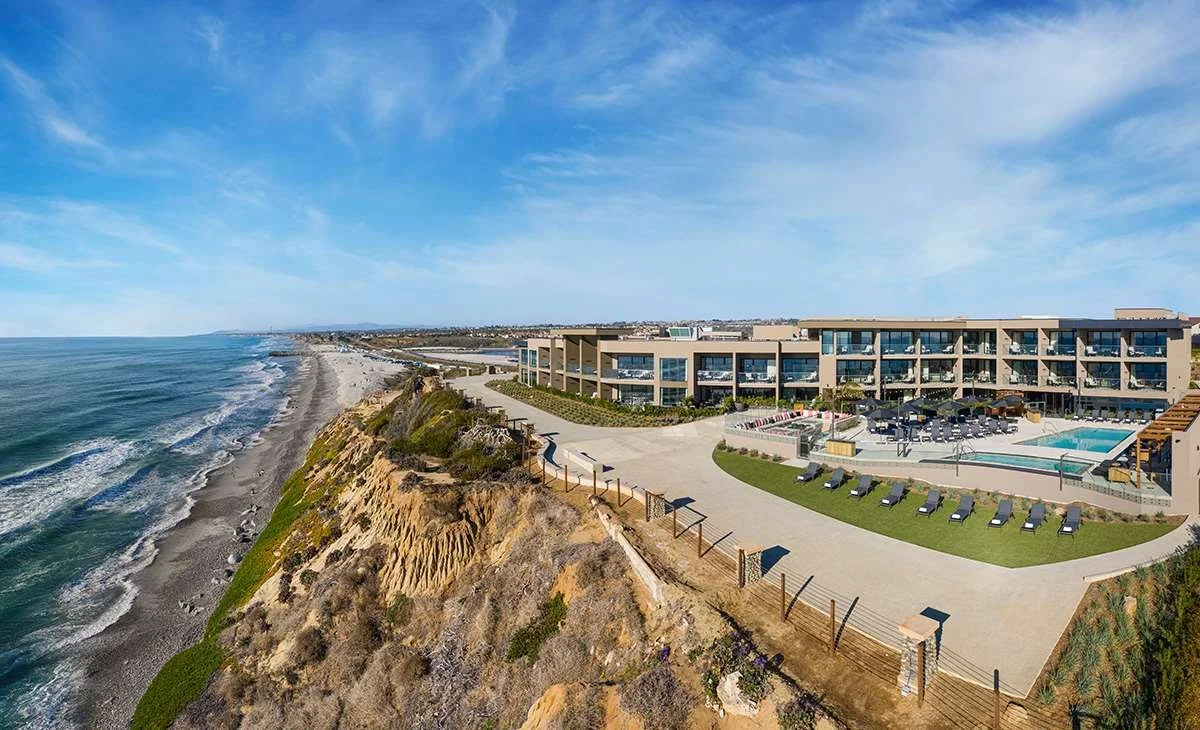
The search for the best beach eco hotels in the us is frequently hampered by a lack of standardized metrics. While various industry certifications exist, many fail to capture the nuanced, site-specific challenges inherent in coastal environments. The central tension lies in the fact that coastal development is, by its very nature, an intrusion into a high-energy zone characterized by constant geologic change. Oversimplifying this to a checklist of “green” features—like low-flow showerheads or recycled linens—ignores the primary drivers of coastal impact, such as wastewater nitrogen loading and artificial light dispersion.
A sophisticated understanding of this sector requires a shift in perspective. Instead of viewing a hotel as a static entity, we must view it as a permeable node within a dynamic ecosystem. The most authoritative properties do not just minimize their footprint; they actively integrate into the local coastal processes. They utilize permeable foundation systems that facilitate sediment transport, prioritize native vegetation that reinforces dune stability, and implement closed-loop water systems to protect the near-shore marine environment from eutrophication.
Misunderstandings often arise from the assumption that sustainability necessitates a sacrifice in quality. On the contrary, the highest-performing coastal destinations demonstrate that ecological integrity often enhances the guest experience. A property that preserves its native landscape offers a more authentic, restorative connection to the shore than one that replaces it with manicured, resource-intensive lawns. Identifying the best beach eco hotels in the us is, ultimately, an exercise in recognizing the synthesis of engineering excellence, biological awareness, and architectural restraint.
Deep Contextual Background
By mid-century, this evolved into large-scale, concrete-heavy complexes that relied on mechanical systems to shield occupants from the very environment they came to visit. This era left behind a legacy of “hard” infrastructure, including massive sea walls and revetments, which, while intended to protect assets, often starved down-drift beaches of natural sand and accelerated erosive trends.
The transition toward the modern, ecologically sensitive hotel began to coalesce in the late 1990s as the economic costs of storm damage and the loss of recreational beach width became too significant to ignore. Municipalities started enforcing stricter setback requirements and light-management policies, particularly for protected species. This regulatory environment, while initially viewed as a burden by developers, became the catalyst for a new design language. Today, we are seeing the rise of “regenerative coastal design,” which emphasizes mobility, adaptability, and the use of soft-infrastructure solutions to manage the interface between the interior and the sea.
Conceptual Frameworks and Mental Models
To effectively navigate this space, it is useful to apply a set of diagnostic models that help strip away marketing noise and reveal the underlying performance of a property.
-
The Dynamic Equilibrium Framework: A model that assesses whether the property’s site plan respects natural processes like longshore drift and overwash. If a hotel requires perpetual human intervention (such as dredging or sand nourishment) to exist, it is not sustainable, regardless of its internal efficiency.
-
The Watershed Impact Model: An evaluation of how the property handles its hydrological cycle. Coastal properties are often the primary source of nutrient runoff; the best beach eco hotels in the us utilize advanced, on-site wastewater treatment technologies that ensure discharge meets high water-quality standards.
-
The Embodied Energy vs. Operational Efficiency Balance: This framework looks at the material choices of the building itself. A concrete-heavy building may have high embodied carbon but offer durability in hurricane-prone zones, requiring a nuanced cost-benefit analysis regarding materials and lifespan.
-
The Species-Centric Design Model: A mental model where the property designer asks, “How does our light, sound, and physical footprint interfere with the life cycle of the most sensitive indicator species on this specific stretch of coastline?”
Key Categories and Comparison
The market for high-performance coastal lodging can be divided into several distinct categories, each with its own set of trade-offs.
| Category | Operational Focus | Primary Benefit | Key Trade-off |
| Adaptive Modular | Mobility/Low impact | Minimal soil disruption | High design/maintenance cost |
| LEED-Standardized | Efficiency/Utility | Known performance | Potential “standardization” risk |
| Restorative Reserve | Biodiversity/Habitats | High ecological value | Limited service scale |
| Coastal Adaptive Reuse | Preservation | Reduced embodied energy | Structural limitations |
Deciding between these requires an honest assessment of one’s goals. If the intention is to support deep-tier biodiversity, a property that functions as a research-adjacent reserve is ideal. Conversely, for a traveler seeking urban access alongside environmental responsibility, an adaptive-reuse facility in a developed city context may provide the highest net benefit by repurposing existing, carbon-heavy infrastructure.
Real-World Scenarios and Decision Logic
Scenario 1: The Barrier Island Shoreline.
A property is proposed on a barrier island, a highly mobile landscape. The decision point is foundation type. A rigid, concrete slab will inevitably cause scouring and disruption to the natural beach profile. An authority-level approach involves elevated construction on pilings, which allows for natural wind and water flow. The failure mode, however, is a second-order effect: if the pilings are too close together, they still disrupt dune formation.
Scenario 2: Managing Night-time Biodiversity.
Many coastal areas are crucial nesting grounds for sea turtles, which are notoriously sensitive to artificial light. A top-tier property must not only install downward-shielding lighting but also implement automated dimming systems for interior spaces. The failure mode here is “ambient light leakage,” where poorly designed interiors allow light to escape through large glass surfaces, creating a “sky-glow” effect that disorients hatchlings.
Planning, Cost, and Resource Dynamics
The financial reality of the best beach eco hotels in the us is characterized by higher upfront costs but lower long-term risk. Standard coastal development is often fueled by the expectation that the municipality will bear the cost of storm mitigation or beach maintenance. The authentic eco-hotel internalizes these costs, investing heavily in resilient design upfront to avoid catastrophic loss later.
-
CAPEX: High premiums for specialized climate-resilient engineering, modular foundations, and high-efficiency water treatment.
-
OPEX: Significantly lower energy and water costs, coupled with lower insurance premiums due to superior risk management.
-
Opportunity Cost: Choosing a high-authority property often means accepting a less “manicured” beach experience, as the hotel prioritizes natural dune cycles over pristine, raked sand.
Tools, Strategies, and Support Systems
Properties that consistently appear among the best beach eco hotels in the us utilize a suite of sophisticated tools for management and guest education:
-
Sub-metering: Real-time tracking of water and energy usage for every room and common area, allowing for rapid identification of leaks or inefficiencies.
-
Telemetry-based Landscaping: Using sensors to measure soil moisture and salinity, ensuring irrigation is only used when strictly necessary.
-
Third-Party Ecological Audits: Regularly contracting with independent biologists to assess the state of the surrounding habitat.
-
Community-Linked Waste Streams: Partnering with local businesses to turn food waste into compost or bio-energy, closing the loop within the regional ecosystem.
Risk Landscape and Failure Modes
The taxonomy of failure in coastal sustainability is often subtle. The most dangerous risks are compounding:
-
The “Amenity Creep” Factor: A property may open with a strong eco-focus, but over time, competitive pressure forces the addition of resource-heavy amenities (e.g., heated pools, industrial-scale HVAC), gradually eroding the initial model.
-
Regulatory Rigidity: An operator might install a system—such as a specific grey-water reclamation setup—that becomes obsolete due to shifting municipal codes, forcing expensive, unplanned retrofits.
-
Supply Chain Opacity: A property may be perfectly efficient on-site but continue to source luxury amenities (textiles, food, imported furniture) that possess massive, uncounted carbon footprints.
Governance, Maintenance, and Long-Term Adaptation
To survive as a high-authority asset, a property must adopt a culture of perpetual review. This is not a project with a fixed completion date, but an iterative process.
-
Adjustment Triggers: Define clear thresholds for intervention. For example, if energy use per guest night exceeds a certain benchmark for three consecutive months, an immediate audit of climate control systems is triggered.
-
Layered Maintenance Checklist:
-
Daily: Monitoring of utility usage and light-pollution controls.
-
Seasonal: Assessment of dune vegetation health and potential sand-inundation issues.
-
Annual: Full audit of wastewater performance and review of ecological data from local partners.
-
Measurement, Tracking, and Evaluation
Legitimate performance is defined by the quality of a property’s data. Leading indicators—such as the percentage of food sourced within a 100-mile radius—provide insight into future resilience. Lagging indicators—such as total kilowatt-hours per occupied room—provide a historical record of efficiency.
A robust property will maintain transparent documentation, such as:
-
Annual Sustainability Disclosure: A public-facing document that reports not just “green” efforts, but concrete data on resource consumption.
-
Habitat Restoration Reports: Detailed logs documenting the progress of native plantings and species usage of the site.
-
Water Quality Testing Data: Regular, transparent publication of wastewater discharge quality relative to ambient coastal standards.
Common Misconceptions and Oversimplifications
-
Myth: “All eco-hotels have poor connectivity and lack comfort.” Correction: The best properties integrate high-performance insulation and smart building management to provide superior climate control and acoustic privacy.
-
Myth: “Recycling is the best way to handle waste.” Correction: Source reduction—refusing the entry of waste-intensive packaging—is the only effective strategy.
-
Myth: “LEED status guarantees a perfect property.” Correction: LEED is a solid baseline, but it often focuses on indoor air quality and construction; it must be supplemented by site-specific ecological metrics.
Conclusion
The pursuit of the best beach eco hotels in the us is, at its heart, an attempt to reconcile human leisure with the non-negotiable reality of coastal geology and biology. Properties that set the standard in this field do not seek to overcome the environment; they seek to participate in it. By prioritizing structural resilience, hydrological integrity, and long-term biological health, these establishments provide a template for how the hospitality industry can evolve.