Best Eco Hotels for Corporate Hosting: A Strategic Guide
The traditional corporate event—often characterized by high-resource consumption, significant travel-related carbon footprints, and a “more is better” aesthetic—is undergoing a profound transformation. In 2026, sustainability has transitioned from a peripheral marketing objective to a central operational mandate. Corporations are increasingly held to account by stakeholders, employees, and regulatory frameworks for the environmental impact of their gatherings. Consequently, the choice of venue has become the most critical lever in managing this footprint.
As corporate event planners navigate this shift, they must move beyond surface-level “green” signifiers. A venue that offers high-speed connectivity and ergonomic comfort is no longer sufficient if it fails to integrate circular resource management, energy-efficient infrastructure, and community-embedded practices. The objective is to identify spaces that align high-level professional requirements with a commitment to regenerative environmental performance, ensuring that every meeting, conference, and retreat contributes to a broader goal of ecological stewardship.
This analysis explores the systemic requirements for sustainable corporate hosting. It dissects the criteria necessary to evaluate properties that function as effective professional hubs while actively minimizing their environmental burden. By prioritizing verifiable performance metrics over aesthetic gestures, planners can secure long-term value, foster deeper stakeholder connection, and align their organization’s culture with its public sustainability commitments.
Understanding “best eco hotels for corporate hosting”
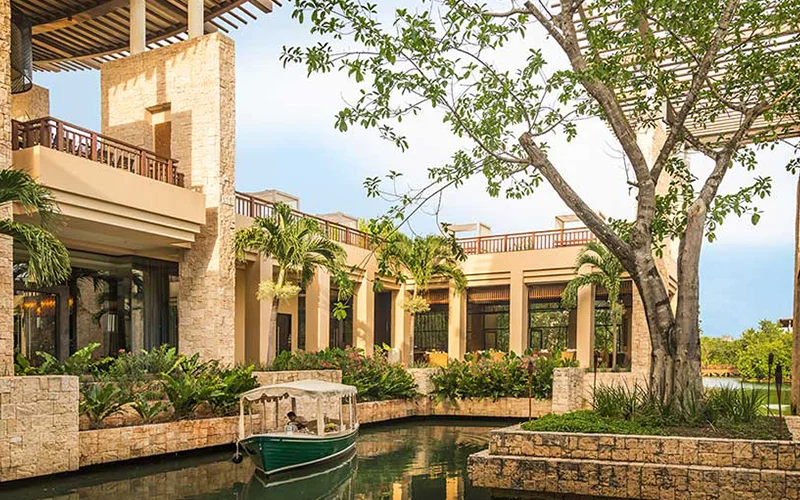
When industry professionals and corporate event coordinators attempt to identify the best eco hotels for corporate hosting, they frequently fall into the trap of linear benchmarking. The most pervasive misunderstanding is the assumption that sustainability can be isolated as a single feature—such as the presence of recycling bins or a “green” logo. True sustainability, however, is a systemic quality. A property may utilize high-efficiency HVAC systems but fail completely in its supply chain, food sourcing, or waste diversion efforts.
The risk of oversimplification is that a planner might prioritize a venue with a high-visibility, low-impact amenity (e.g., promotional “sustainable” stationary) while overlooking the high-impact, invisible failures (e.g., reliance on fossil-fuel-intensive transportation or excessive water usage in arid regions). To properly evaluate the best eco hotels for corporate hosting, one must adopt a multi-dimensional lens. The “best” venue is not merely one that “does green,” but one that integrates high-performance corporate infrastructure—such as robust, stable connectivity, modular event spaces, and professional-grade accessibility—with a deep, operational commitment to regenerative environmental practices.
Deep Contextual Background: The Evolution of Professional Gatherings
The history of corporate event hosting has moved from the “Volume Phase,” where success was measured by attendee numbers and extravagant consumption, to the current “Value Phase.” In the early 2010s, event sustainability was largely aesthetic—marketing-driven, paper-saving campaigns, and basic waste recycling. The mid-2020s accelerated this evolution toward a performance-based paradigm, heavily influenced by international standards like ISO 20121, which provides a framework for managing the sustainability of events. We are now seeing a maturation where venues are expected to provide transparent, audit-ready data on energy usage, waste diversion, and social impact, effectively turning the venue into a partner in the organization’s ESG (Environmental, Social, and Governance) performance.
Conceptual Frameworks and Mental Models
-
The ESG-Performance Integration Model: This model assesses how a venue’s sustainability efforts contribute directly to the client company’s overall ESG targets. It moves the focus from “what the hotel does” to “how the venue helps the client succeed.”
-
The Infrastructure-Resilience Ratio: Evaluates the venue’s ability to provide professional-grade reliability (e.g., redundant Wi-Fi, smart climate control) through sustainable means (e.g., onsite renewables, energy storage).
-
The Circular Lifecycle Model: A framework that tracks resource flows—from the food served (sourcing, composting) to the materials used for decor and branding (reusable, modular)—ensuring that nothing ends up in a landfill.
Key Categories and Variations
When evaluating the best eco hotels for corporate hosting, venues can be categorized by their operational strength:
| Venue Category | Professional Utility | Sustainability Focus | Best For |
| Urban Green-Hubs | High (Tech/Accessibility) | Moderate (Grid/Waste) | Large-scale conferences |
| Boutique Retreats | Moderate (Focused) | High (Regenerative) | Executive strategy sessions |
| Industrial Retrofits | Moderate (Modular) | High (Embodied Carbon) | Immersive brand experiences |
| Eco-Conference Centers | Very High (Professional) | Very High (Certified) | Complex, multi-day summits |
Decision logic for planners should favor “Industrial Retrofits” or “Eco-Conference Centers” when professional infrastructure is the priority, while reserving “Boutique Retreats” for smaller, high-impact sessions where the environment is intended to influence the meeting’s outcome.
Detailed Real-World Scenarios and Decision Points
-
Scenario: The Multi-Day Global Summit. The primary constraint is attendee travel. Decision point: Choose a location with high-speed rail access over an airport-dependent city to drastically reduce the event’s overall carbon footprint. Failure mode: Prioritizing “cheaper” travel costs at the expense of massive scope-3 emissions.
-
Scenario: The Executive Strategy Retreat. The goal is deep focus. Decision point: Selecting an off-grid lodge that provides high-performance acoustics and immersive, nature-integrated workspaces. Second-order effect: The setting naturally discourages excessive digital distraction, leading to better outcomes.
-
Scenario: The Product Launch. Requires high energy for lighting and tech. Decision point: Partnering with a venue that utilizes onsite renewables or green energy certificates to power the hardware-heavy event.
Planning, Cost, and Resource Dynamics
The economic evaluation of these venues must shift from purely transactional costs to long-term “total value” assessments.
| Cost Element | Investment Type | Value Drivers |
| Venue Tech Upgrades | High CapEx | Reliability, attendee experience |
| Localized Sourcing | Variable OpEx | Brand value, social impact |
| Waste/Carbon Audits | Fixed Service Cost | ESG reporting accuracy |
Planners must weigh the “green premium”—which may exist in initial pricing—against the avoided costs of poor event logistics and the long-term reputational value of aligning with verified sustainable partners.
The Risk Landscape and Compounding Failure Modes
The primary risk is the “integration disconnect,” where a venue offers excellent sustainable catering but fails to provide the high-speed connectivity needed for a hybrid presentation. Compounding failures often occur when event technology is deployed without considering the venue’s smart-building limitations, resulting in power brownouts or connectivity bottlenecks. These risks underscore the need for early and granular technical vetting.
Governance, Maintenance, and Long-Term Adaptation
The best eco hotels for corporate hosting utilize a proactive management style:
-
Continuous Monitoring: Real-time dashboards for energy and water usage during events.
-
Review Cycles: Post-event debriefs that focus on “sustainability performance” (e.g., waste diversion rate, local sourcing %) rather than just logistical satisfaction.
-
Layered Checklists: Pre-event audits that align supplier capabilities with the venue’s sustainable practices, preventing the introduction of non-compliant materials or waste-heavy processes by external vendors.
Measurement, Tracking, and Evaluation
Evaluation should rely on both leading and lagging indicators:
-
Leading Indicators: Real-time latency stats, waste bin sort-check accuracy, and energy load per attendee-day.
-
Lagging Indicators: Total CO2-equivalent emissions per participant, the percentage of local food consumed, and post-event waste-to-landfill ratios.
-
Documentation: Requiring a “Sustainability Impact Report” from the venue as part of the standard post-event deliverable.
Common Misconceptions and Oversimplifications
-
“Paperless means sustainable.” Digital solutions carry their own energy-use profile; the goal is overall footprint reduction, not just the elimination of physical media.
-
“Carbon offsets are a complete strategy.” Offsets should be the final resort, not a substitute for active energy reduction and waste minimization.
-
“All green labels are equal.” Certifications vary widely; focus on those that are performance-based and transparent (e.g., ISO, LEED, BREEAM).
-
“Eco-hotels lack professional reliability.” Modern sustainable venues often lead in smart-infrastructure investment, providing some of the most stable and modern environments available.
Conclusion
Selecting the best eco hotels for corporate hosting is a strategic decision that demands rigorous analysis. By moving beyond marketing claims to verify operational performance, professional planners can ensure their events not only achieve business objectives but also uphold the company’s commitment to social and environmental responsibility. As corporate expectations evolve, the venue will increasingly be viewed as a critical component of the organization’s own sustainability infrastructure. The properties that thrive will be those that provide, with absolute clarity, the professional-grade performance and verifiable environmental stewardship required to succeed in a resource-constrained future.