Top Eco Hotels Packages: A Guide to Authentic Sustainable Luxury
The contemporary travel landscape is undergoing a structural realignment. Where luxury once dictated an experience defined by excess and isolation, the modern standard of high-end hospitality has pivoted toward integration, stewardship, and systemic accountability. This shift is not merely aesthetic—it is a fundamental departure from the extractive models of 20th-century mass tourism. Travelers seeking genuine engagement with a destination now look past the veneer of green certifications toward operational realities that reconcile comfort with ecological integrity.
As the industry matures, the friction between luxury and sustainability has largely dissolved. Discerning the difference between a facility that performs performative recycling and one that is architecturally and operationally regenerative requires a shift in the traveler’s mindset—from passive consumer to active auditor of the travel experience.
This examination serves as a roadmap for understanding the mechanics behind the most sophisticated sustainable hospitality assets today. It explores the operational, social, and environmental frameworks that define legitimate excellence, moving beyond the superficiality of typical travel narratives to address the systemic challenges of building and maintaining a truly regenerative hospitality footprint.
Understanding “top eco hotels packages”
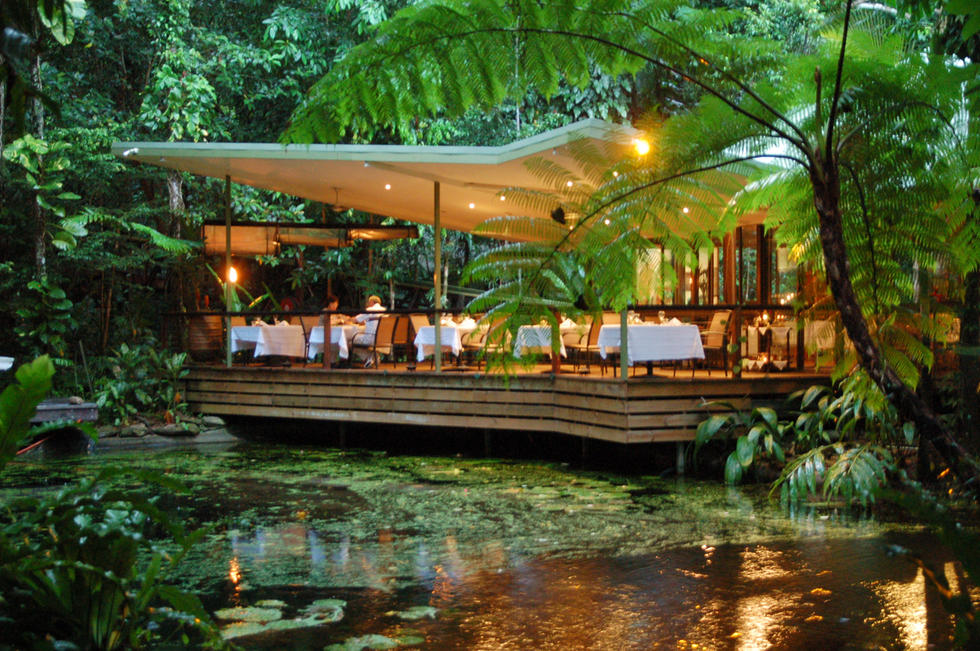
The phrase “top eco hotels packages” is often treated as a singular product, yet it represents an amalgam of logistical and philosophical commitments. At its core, these packages represent a curated intersection of high-end service and ecological stewardship. However, the term is frequently subjected to “greenwashing,” where marketing departments leverage buzzwords—such as “carbon-neutral,” “organic,” or “sustainable”—without accompanying structural data.
True “top eco hotels packages” are identified by their ability to provide a comprehensive guest experience that is fundamentally inseparable from the property’s sustainability efforts. If a package is decoupled from the operational reality of the hotel—meaning the guest is merely consuming a service while the hotel’s underlying operations remain extractive—it is not an authentic eco-offering.
Deep Contextual Background
Historically, hospitality was an industry of convenience, designed to replicate a home-like experience regardless of location. This “universal standard” approach relied heavily on imported resources and standardized supply chains, which often alienated the property from its immediate environment. The evolution toward ecological consciousness began as a niche resistance—small, owner-operated lodges that utilized local vernacular architecture and off-grid technology.
Over the last two decades, this has evolved into a systemic integration. We are seeing a shift from “do no harm” (the mitigation phase) to “positive impact” (the regenerative phase). Modern hospitality now frequently involves properties that operate as nodes in a wider ecological network, contributing to biodiversity corridors, utilizing indigenous architectural wisdom to eliminate the need for mechanical climate control, and participating in circular waste economies that serve both the hotel and its neighboring communities.
Conceptual Frameworks and Mental Models
To evaluate the legitimacy of a sustainable hospitality offering, one must apply rigorous mental models rather than relying on marketing claims.
-
The Regenerative Quotient: This model evaluates whether a property leaves a destination better than it found it. Does the tourism revenue actively restore an endangered ecosystem or preserve a fading cultural practice?
-
Supply Chain Transparency: A truly top-tier property accounts for the origin of every resource consumed. From linens to luxury toiletries to foodstuffs, the proximity of the supply chain is a leading indicator of ecological integrity.
-
The “Invisible Guest” Principle: This framework asks if the guest experience relies on the exploitation of natural resources in a way that is hidden from view. A high-scoring property manages its resource scarcity transparently with the guest, rather than masking it behind high-pressure water systems or constant energy consumption.
-
Operational Circularity: This model looks at the property as a closed loop. Can the property compost its food waste on-site, reuse gray water for landscape irrigation, and generate at least a portion of its power via renewable on-site sources?
Key Categories and Variations
Not all sustainable hospitality models are identical. The following categories represent different approaches to ecological integration.
| Category | Primary Focus | Trade-Offs |
| Off-Grid Luxury | Energy/Water Independence | Higher logistical complexity for guests |
| Vernacular Design | Integration with local climate | Limited modern amenities (e.g., A/C) |
| Conservation-Centric | Habitat/Biodiversity focus | Often remote; requires travel time |
| Circular Urban | Waste/Resource efficiency | Higher reliance on external infrastructure |
| Cultural Heritage | Socio-economic preservation | High management load; sensitive integration |
Realistic Decision Logic
When selecting between these, the traveler must first identify their “sustainability baseline.” If a guest prioritizes energy efficiency above all, an Off-Grid property is the logical choice. If the priority is cultural preservation and community economic support, a property focused on local employment and indigenous heritage management is superior.
Detailed Real-World Scenarios
Scenario A: The Remote Wilderness Retreat
-
Constraint: Extreme distance from traditional power/waste grids.
-
Decision Point: Does the property manage its own waste, or does it export it?
-
Failure Mode: If the property relies on fossil fuel generators for 24/7 power, it is a high-impact facility masquerading as an “eco” site.
-
Second-Order Effect: The creation of a “wilderness” aesthetic often leads to increased air traffic to reach the destination, which must be offset to remain credible.
Scenario B: The Urban Adaptive Reuse Hotel
-
Constraint: Limited ability to alter the building’s physical envelope.
-
Decision Point: Does the hotel prioritize retrofitting high-efficiency HVAC over aesthetic renovations?
-
Failure Mode: A historic property that preserves its facade but maintains inefficient, non-upgradable heating and cooling systems.
-
Second-Order Effect: Long-term energy debt that eventually necessitates a complete, high-impact overhaul.
Planning, Cost, and Resource Dynamics
Sustainable luxury frequently involves higher operational costs due to labor-intensive practices, such as local sourcing and small-scale resource management.
-
Direct Costs: Higher prices are often justified by the “true cost” of the goods and services provided, which include fair wages for local artisans and environmental restoration fees.
-
Opportunity Cost: Choosing a truly sustainable property may mean sacrificing proximity to major tourism hubs or the convenience of mass-market luxury amenities.
| Cost Range | Typical Inclusions | Sustainability Maturity |
| Moderate | Basic recycling, local food | Foundational |
| Premium | Renewable energy, community support | Intermediate |
| Ultra-Luxury | Regenerative infrastructure, conservation | High/Integrated |
Risk Landscape and Failure Modes
The “top eco hotels packages” ecosystem faces significant risks. The most prevalent is systemic misalignment, where a property’s marketing team promotes sustainability while its facilities management team operates under traditional, high-consumption protocols. Another risk is regulatory capture, where certifications become so diluted that they no longer represent a commitment to the environment but rather a “pay-to-play” compliance sticker.
Compounding these is the risk of unintended ecological consequences. For instance, a property that attracts thousands of visitors to a fragile ecosystem for “eco-tours” may inadvertently cause more damage through foot traffic and waste than a standard hotel might in a resilient urban center.
Measurement, Tracking, and Evaluation
Legitimate properties do not hide behind vague promises. They provide data. When vetting a property, look for the following:
-
Leading Indicators: Does the property have a published waste diversion target for the upcoming year?
-
Lagging Indicators: Does the property report its annual water usage per guest-night?
-
Qualitative Signals: Are staff members trained specifically in the conservation goals of the property? Does the guest-facing literature explain the “why” behind the sustainability measures (e.g., why water is rationed or why specific seasonal foods are served)?
Common Misconceptions and Oversimplifications
-
“Sustainable” means “minimalist”: Many believe eco-hotels must be rustic or uncomfortable. Modern engineering has proven that luxury and efficiency can coexist.
-
Certification is the final word: Certifications are a starting point, not a guarantee. They often fail to capture the nuances of daily operational realities.
-
Carbon offsets solve everything: Offsetting is a remedial measure, not a substitute for reduction. A property that consumes excess energy and then buys credits is not truly sustainable.
Conclusion
The pursuit of the finest eco-conscious hospitality requires a shift in the traveler’s lens. When evaluating top eco hotels packages, one must consider the property not as a commodity to be purchased, but as a system to be assessed. True quality in this sector is defined by the depth of integration between the hospitality experience and the ecological and social fabric of the host destination. By focusing on verifiable operational practices, circular resource management, and genuine community engagement, the traveler can participate in a model of tourism that values longevity and integrity over the fleeting comforts of traditional excess.