Best Eco Hotels for Honeymooners: Authentic Sustainable Luxury Guide
The honeymoon, traditionally a milestone of indulgence, increasingly functions as a litmus test for the modern traveler’s values. As the industry moves past the era of standard-issue luxury, where opulence was measured in excess and distance from reality, a new paradigm has emerged. Couples are no longer satisfied with aesthetic comfort alone; they are seeking environments that harmonize deep intimacy with radical accountability. This shift represents a transition from performative green marketing to a sophisticated, systems-based approach to hospitality that respects both the guest and the host ecosystem.
Authentic sustainable hospitality at this scale is not a set of amenities but a deliberate design philosophy. The challenge for the modern couple lies in the opacity of the market. Marketing collateral often mirrors the language of genuine conservation, creating a landscape where discerning the structural integrity of a property’s “green” claims requires a departure from standard research methods. True ecological responsibility is found in the administrative, the invisible, and the operational—in energy audit logs, supply chain transparency, and community integration—rather than in the superficial presence of a single bamboo straw.
To navigate this complexity is to move beyond the binary of luxury versus sustainability. It is to recognize that the most sophisticated properties are those that have reconciled these concepts through rigorous, long-term engineering and cultural commitment. This article serves as a professional assessment framework for couples, designed to assist in identifying properties that offer a substantive, rather than cosmetic, commitment to the environment.
Understanding “best eco hotels for honeymooners”
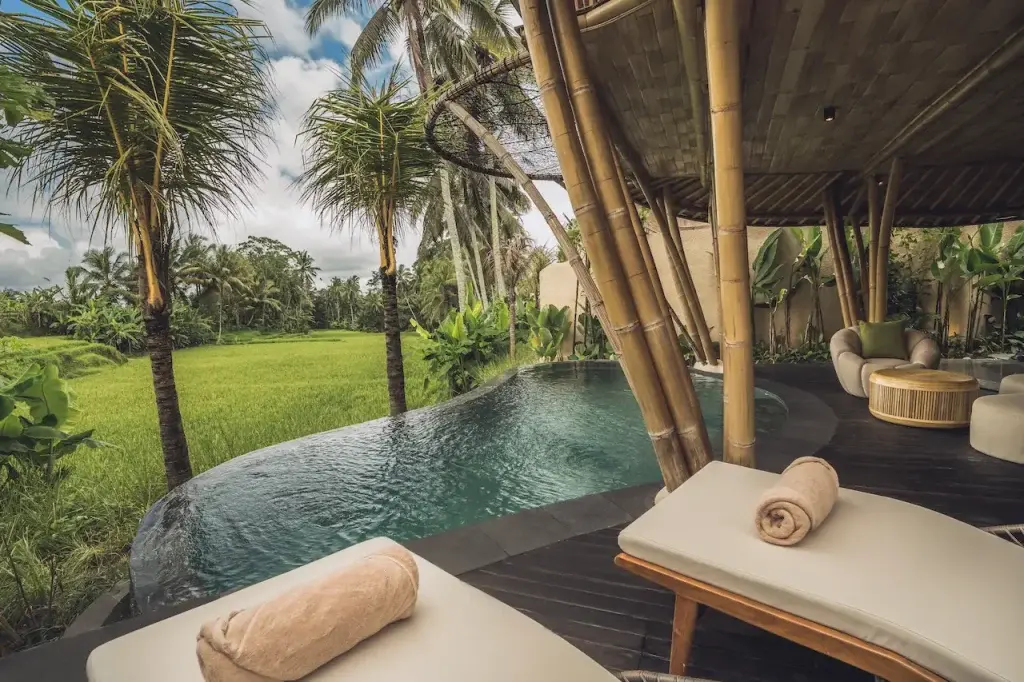
The search for the best eco hotels for honeymooners is frequently undermined by a semantic trap: the conflation of “nature-adjacent” with “nature-positive.” A hotel may be located in a lush rainforest, providing a stunning backdrop for a romantic retreat, while simultaneously importing all its resources and exporting its waste, thereby acting as a parasitic entity rather than a symbiotic one.
The “best” properties are defined by their ability to provide a high-fidelity guest experience that is fundamentally inseparable from the property’s sustainability efforts. In these instances, the romantic experience—a candlelit dinner, a private excursion, the architectural serenity of a villa—is an authentic byproduct of the hotel’s restorative footprint. If the romantic amenities are decoupled from the environmental operations, the property is likely engaging in a marketing exercise rather than an ecological one. Authenticity here is characterized by the seamless integration of luxury and systemic responsibility, where the guest experience serves to fund, support, or educate on the very conservation efforts that protect the destination.
Deep Contextual Background
The evolution of sustainable hospitality has followed a trajectory from boutique resistance to institutional standard. In the mid-20th century, the industry largely favored a “universal template”—a standardized design that could be exported to any climate, usually requiring massive, energy-intensive mechanical intervention to simulate a specific “international” level of comfort.
The late 1990s and 2000s saw the rise of the “eco-lodge” as a reactive movement. These properties often prioritized ecological integrity over the traditional definitions of luxury, leading to a bifurcation in the market. Today, however, we are witnessing a synthesis. Regenerative hospitality has emerged as the new benchmark. This model moves beyond the “do no harm” philosophy of the early eco-movement and toward an active restoration of the local landscape and culture. Modern properties are increasingly designed as part of a biological and social corridor, utilizing indigenous materials to provide passive climate control and creating circular economies that benefit the local community. The result is a marriage of comfort and stewardship that no longer views the two as competing interests.
Conceptual Frameworks and Mental Models
To evaluate the legitimacy of a property, one should apply the following evaluative frameworks:
-
The Net-Positive Indicator: Does the hotel’s presence demonstrably improve the local ecosystem? This is measured through active projects like reforestation, wildlife habitat protection, or the rehabilitation of local soil health through organic waste management.
-
The Supply Chain Proximity Index: Transparency is the primary signal of intent. A high-performing property can name its food suppliers, detail the provenance of its materials, and explain its resource management protocols. Proximity is not just about miles; it is about the directness of the relationship.
-
The “Invisible Guest” Principle: This approach considers the resource load of the guest. Are there automated sensors or high-flow systems hidden in the walls, or does the guest experience encourage a mindful, engaged relationship with the local climate and energy availability?
-
Socio-Economic Integration: Sustainability is a social endeavor as much as an environmental one. Does the property employ local staff at fair wages? Does it empower community-led initiatives? The best properties are those that the local community supports and respects.
Key Categories and Variations
| Category | Primary Focus | Trade-Offs |
| Bioclimatic Luxury | Passive heating/cooling, local materials | Requires guest adaptation to local climate |
| Conservation-Focused | Active habitat restoration, research support | Often entails lower-density/more rugged terrain |
| Circular-Urban | Advanced waste-to-energy, adaptive reuse | Can feel more “modern” and less “wilderness” |
| Agri-Tourism Retreat | Farm-to-table integrity, land stewardship | Highly dependent on seasonal cycles |
Realistic Decision Logic
When choosing, couples must define their “sustainability threshold.” If the priority is absolute energy independence, look for properties that publish their off-grid energy data. If the priority is local empowerment, look for properties with long-standing community-engagement programs. Avoid properties where “sustainability” is a sidebar; the best ones weave it into the very fiber of the daily operations and guest communication.
Real-World Scenarios and Decision Logic
Scenario 1: The Remote Tropical Pavilion
-
The Constraint: High energy demand for cooling and water filtration.
-
The Decision Point: Is the energy derived from on-site renewables, or is there a reliance on noisy, imported fuel generators?
-
Failure Mode: If the property claims to be “eco” but operates with constant, high-energy cooling, it is effectively a conventional hotel in a remote location.
Scenario 2: The Adaptive Reuse Heritage Property
-
The Constraint: Structural limitations on modern insulation.
-
The Decision Point: Has the property invested in high-efficiency, discreet climate management, or does it lean on high-impact traditional systems?
-
Failure Mode: Prioritizing aesthetic “authenticity” over functional efficiency results in a high carbon footprint that eventually necessitates a complete, energy-intensive renovation.
Planning, Cost, and Resource Dynamics
Sustainable luxury typically operates at a higher price point, reflecting the “true cost” of ethical sourcing and circular management.
-
Direct Costs: Higher operational costs, such as locally sourced organic produce and fair-wage labor, are passed to the guest.
-
Opportunity Cost: Choosing the most sustainable option may mean a departure from the “all-you-can-consume” model of traditional luxury, requiring a shift in expectation regarding resource availability.
| Expense Tier | Sustainability Maturity | Typical Focus |
| Moderate | Foundational | Basic recycling, local staffing |
| Premium | Intermediate | On-site renewable energy, organic menus |
| Ultra-Luxury | Regenerative | Full ecosystem management, carbon-negative ops |
Risk Landscape and Failure Modes
The primary risk is systemic decoupling, where the marketing department outpaces the engineering reality. Be wary of properties that promise “sustainability” but provide no mechanism for verification. Another significant risk is regulatory drift, where vague certifications are used to mask fundamentally unsustainable practices. Compounding these is the “destination-at-risk” factor: if a property encourages high-volume tourism to an ecologically fragile site, it may cause net-negative harm regardless of its on-site efficiency.
Measurement, Tracking, and Evaluation
Legitimate properties provide, or are willing to provide, data. Look for:
-
Resource Audits: Do they publicly or privately disclose their annual waste reduction or water usage stats?
-
Staff Engagement: When asking about conservation efforts, does the staff have a scripted response, or do they offer concrete, nuanced details about current projects?
-
Guest-Facing Transparency: Does the hotel proactively explain its conservation efforts in the room manuals, or is the information buried?
Common Misconceptions and Oversimplifications
-
Sustainability = Rudimentary: There is a persistent myth that eco-friendly means a lack of luxury. Modern engineering proves this false.
-
Certification is a Guarantee: Certifications are snapshots in time. They are helpful markers, not proof of continuous improvement.
-
Carbon Offsets are Enough: True sustainability begins with reduction and optimization, not the purchase of offsets.
Conclusion
The selection of the best eco hotels for honeymooners requires a shift in the evaluative lens. By moving past the visual surface of “nature-friendly” tropes, couples can identify properties that operate as genuine, responsible members of their ecosystems. This approach ensures that the commencement of a shared life is marked by an alignment with one’s values—a recognition that the most enduring luxury is a world preserved. True quality in this sector is not found in the quantity of services provided, but in the integrity of the system behind them.